Tenerife is a paradise for all lovers of fresh sea fish and seafood. You can also enjoy local cheeses here. No table is complete without the wrinkled Papas Arrugadas potatoes, served with mojo sauce. You can also try fish or watercress soup. A versatile local staple added to many dishes is the typical Canarian flour, gofio. For a sweet treat at the end, you can have Quesillo canario or Bienmesabe.
In addition to traditional specialties, you’ll find simple, honest cuisine based on quality ingredients and seasonality. In typical guachinches, informal local taverns, homemade dishes are served that originally started as an accompaniment to local wine. These often include meat in wine, rabbit with garlic, grilled fish, or stewed vegetables seasoned only with salt, herbs, and olive oil. Tenerife offers gastronomy without unnecessary ostentation, but with bold flavors and a strong connection to the local landscape and traditions.
What to taste in Tenerife
My personal tip—definitely don’t miss the typical local mojo sauce. Fortunately, missing it would be very difficult, as mojo is served here with everything from appetizers with bread to main courses like fresh fish and papas arrugadas. If you eat at a restaurant in Tenerife, you’ll likely get mojo with your meal. You can also find this sauce in local supermarkets, making it a nice edible souvenir from Tenerife.
Another purely Canarian food is gofio, a flour made from roasted grains of various cereals. You can find gofio desserts, soup thickened with gofio, and more.
Appetizers
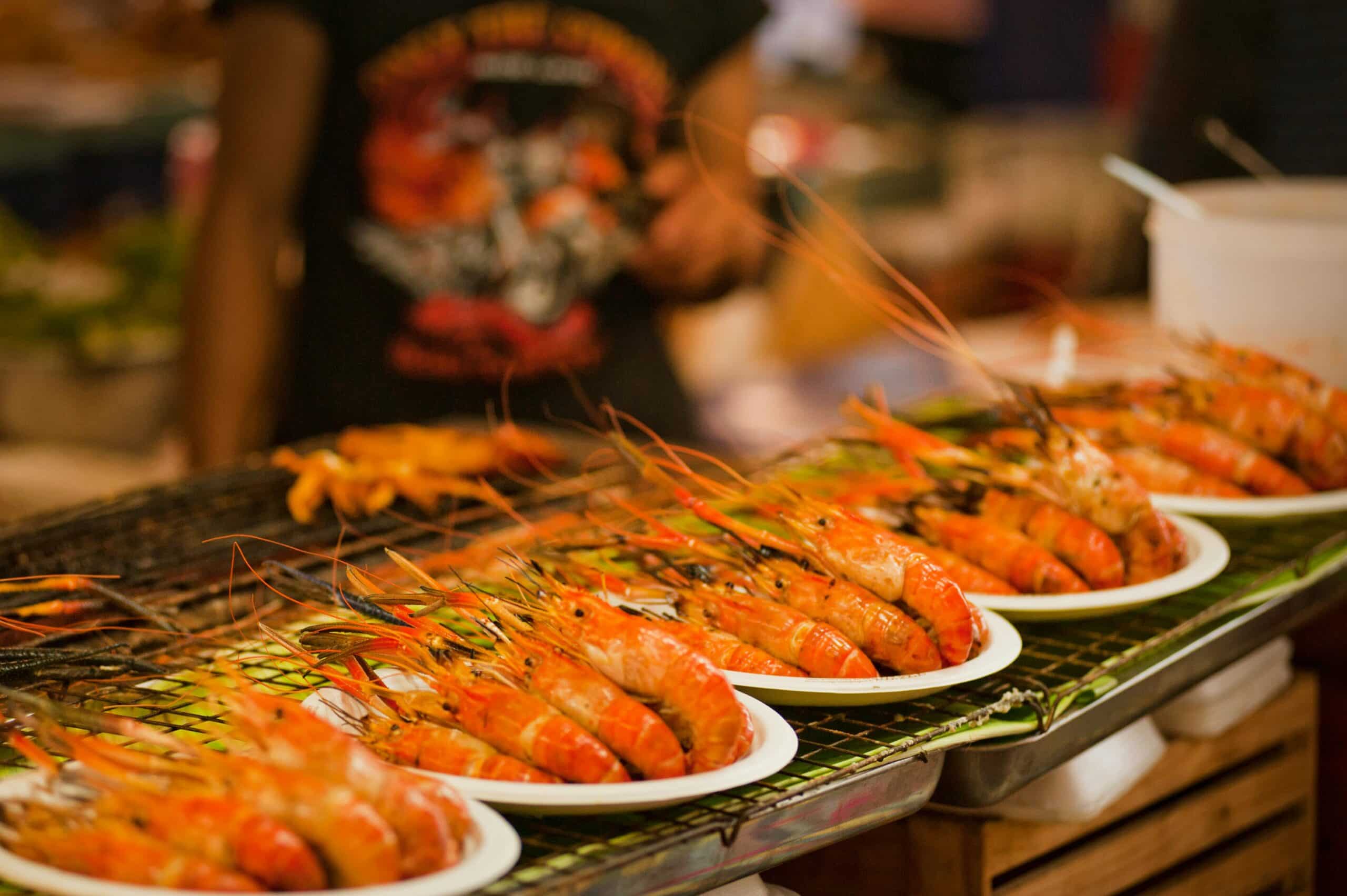
Grilled prawns
One of the typical local appetizers is grilled prawns, marinated in oil with garlic
Sardines
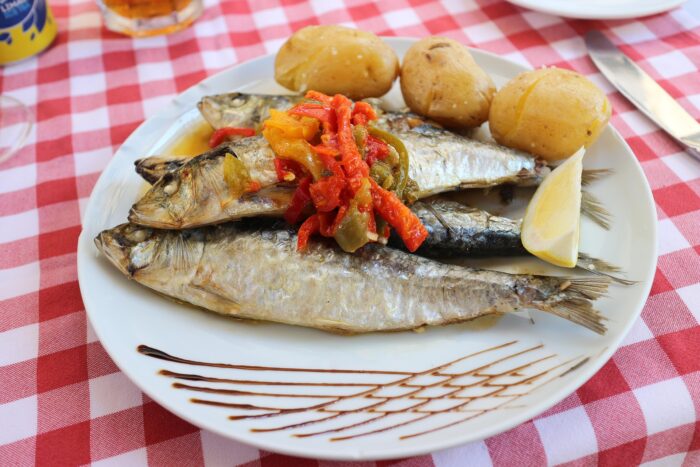
Sardines are another typical appetizer of Canarian cuisine. You can have them fried or grilled (a la parrilla).
Grilled cheese with mojo
Another purely Canarian appetizer is grilled goat cheese, usually served with mojo sauce or palm honey.
Almogrote
You can spread almogrote on toast, a typical local spread made from aged hard cheese, chili peppers, garlic, tomatoes, sweet paprika, and olive oil.
Majorero Goat Cheese
This cheese, originally from the island of Fuerteventura, is made from the milk of the local Majorera goat breed. It is very fatty, which gives the cheese its creamy texture. The cheese matures for up to several months. It is then seasoned with paprika, herbs, or gofio.
Soups
Fish soup Caldo de pescado
A typical Canarian soup made from fish with broth and potatoes.
Rancho canario
This hearty soup made from chicken and pork and vegetables is thickened with Canarian gofio flour. It is typically so thick that a spoon should stand up in it.
Potaje de berros
This thick watercress soup is prepared with watercress, potatoes, beans, and pork. It is served with a piece of corn on the cob. It’s a common appetizer, but its heartiness makes it a full main course.
Main courses
Fresh fish (pescado)
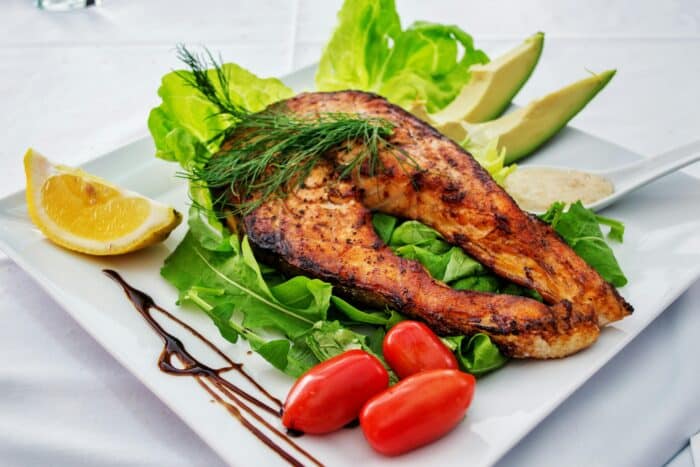
Fresh fish is the cornerstone of Canarian cuisine. Popular choices include cherne (wreckfish), or vieja (parrotfish), which tastes similar to carp. Vieja is often served as vieja sancochada—boiled with potatoes and mojo sauce. Another fish delicacy is Sancocho, a stewed marinated fish. It’s usually sea bass or salted cod.
Prawns, calamari, octopus
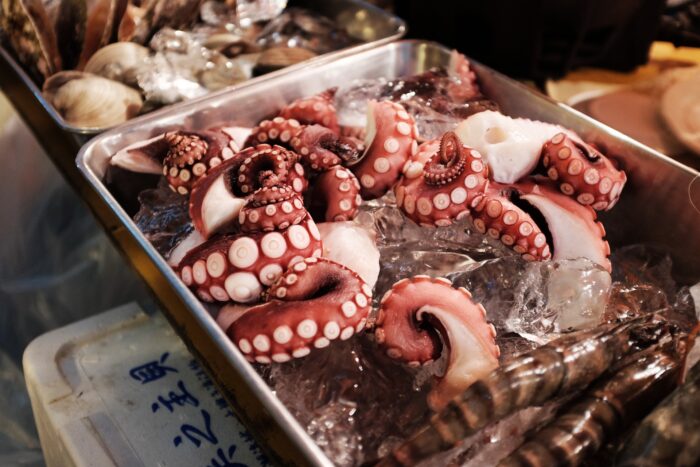
Another common dish in the Canary Islands is fresh seafood.
Wrinkled potatoes Papas Arrugadas
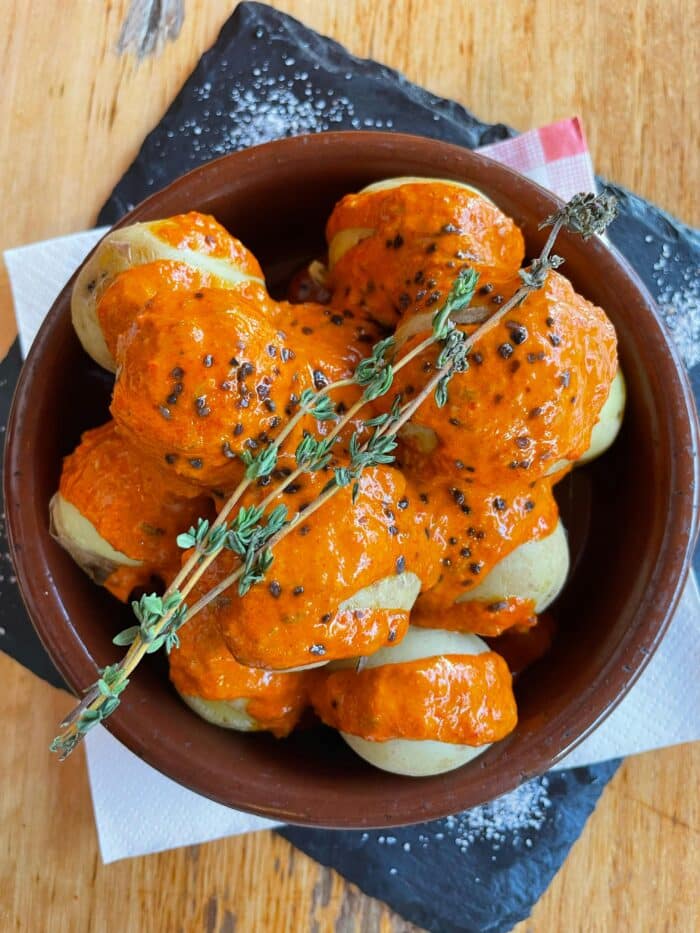
Papas arrugadas are the most common side dish in Tenerife. They are small potatoes, boiled in heavily salted water (originally seawater) with their skins on and then dried over a flame. The result is potatoes with wrinkled skin covered in a salt crust.
Mojo
Mojo is one of the most typical staples of Tenerife cuisine. Green mojo is made from oil, vinegar, garlic, coriander, green pepper, and parsley, while spicy red mojo is prepared from tomatoes, peppers, ground paprika (often hot), and cumin. Mojo sauce is often served as an appetizer with bread; green mojo is eaten with fish, and red is served with papas arrugadas. Mojo was our favorite Canarian treat during our visit to Tenerife.
Conejo en salmorejo
Conejo en salmorejo is rabbit in a spicy tomato sauce. Rabbit meat is popular in Tenerife and is prepared in many different ways.
Garbanzo compuesto
Stewed vegetables with potatoes, thickened with gofio flour.
Paella
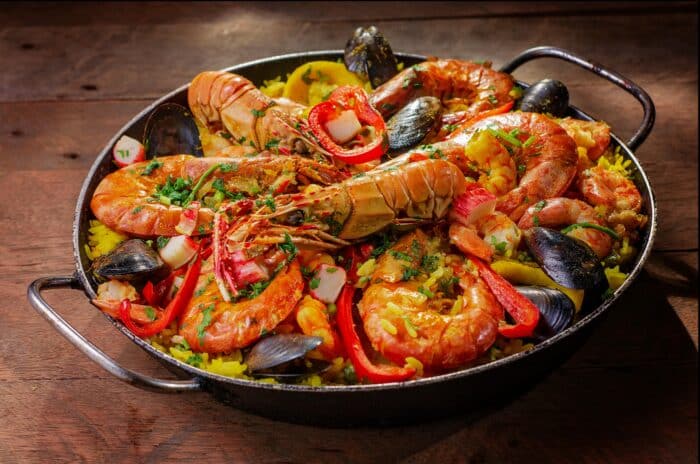
This typically Spanish dish is also a must-have in Tenerife. It’s a dish of rice, vegetables, meat, and seafood, prepared in a single pan called a paellera, similar to risotto or pilaf.
Ropa vieja
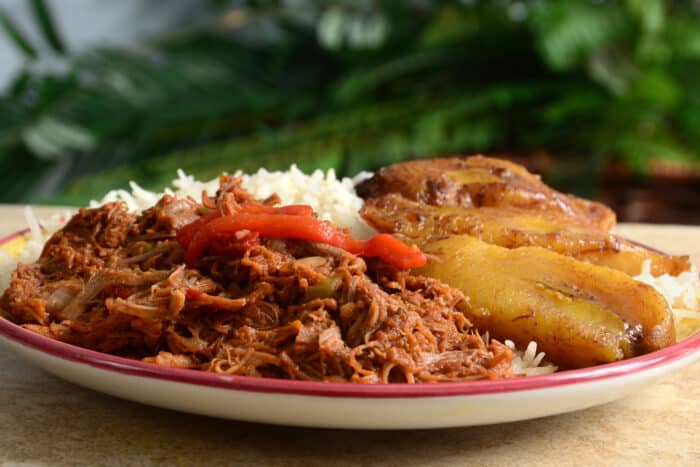
Ropa vieja literally translates to “old clothes” or “old rags.” It’s essentially a dish made from leftovers. It’s prepared from a mixture of shredded beef, potatoes, and chickpeas in a sauce with tomatoes and spices. Legend has it that this dish was first prepared by an old man who had no money for meat, and to feed his family, he shredded old rags into a pot. Thanks to his love, they then turned into a meat dish.
Baifo
Baifo is a dish prepared from goat meat, slow-cooked with aromatic herbs and garlic, then briefly fried and stewed with vegetables until tender.
Adobo de cerdo
Adobo de cerdo is pork shoulder served in a spicy sauce of paprika, garlic, oregano, vinegar, and salt.
Cabrito en adobo
Cabrito en adobo, or also Cazón en adobo, is a traditional Spanish dish originally from Andalusia. It’s prepared from meat, most often kid goat (cabrito) or a bony fish (cazón, school shark) marinated in a mixture of vinegar, garlic, spices—oregano, cumin, and paprika—and then coated in flour and quickly fried. This creates a spicy, tangy, and crispy dish, often served as tapas.
Puchero
Puchero is a traditional hearty Spanish dish similar to a goulash or stew, prepared in a clay pot with beef and pork, peas, sweet potatoes, onions, corn, carrots, and beans.
Tip:
Surprisingly, you can often find good local food even in shopping centers.
Typical desserts in the Canary Islands
Bienmesabe
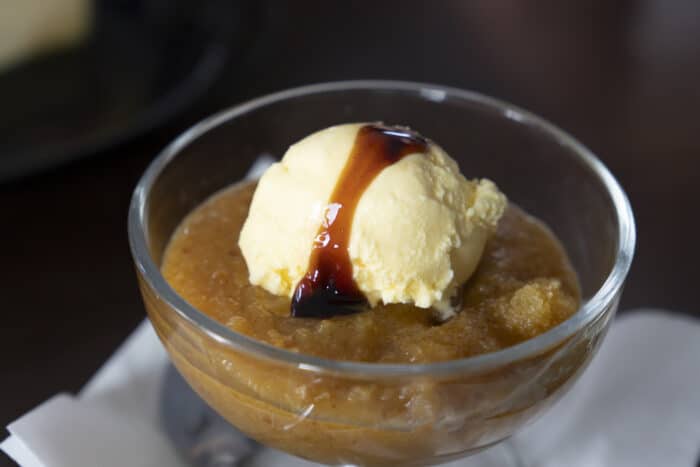
A traditional almond dessert originally from Gran Canaria. Its name literally means “it tastes good to me.” It’s a thick cream prepared from ground almonds, egg yolks, and honey. It’s made by cooking almonds in honey and mixing them with yolks, and is served with vanilla ice cream or on a sponge cake.
Quesillo canario
Quesillo is a traditional Canarian creamy dessert made from condensed milk, eggs, sugar, and lemon zest, topped with caramel. It’s similar to flan but thicker and sweeter. .
Polvito uruguayo
Polvito Uruguayo is a layered dessert that originates from the Canary Islands. Its base is a layer of crumbly biscuits with vanilla cream, caramel, whipped cream, and a layer of crushed meringues. It’s served in a glass.
Frangollo
Frangollo is a traditional sweet dessert similar to pudding, popular mainly in Tenerife. It’s made from gofio flour, milk, sugar, honey and spices, almonds, and raisins. It’s often served with honey or palm syrup.
Traditional Canarian Christmas pastries filled with a sweet filling of sweet potatoes, almonds, and often raisins or cinnamon. They are shaped like empanadas and most often appear on tables during the Christmas holidays.
Almendrados
Spanish almond cookies made from crushed almonds, sugar, and eggs.
Flambéed bananas
Flambéed bananas are one of the specialties of Tenerife. Bananas are grown everywhere here.
Fruit in Tenerife
Chirimoya
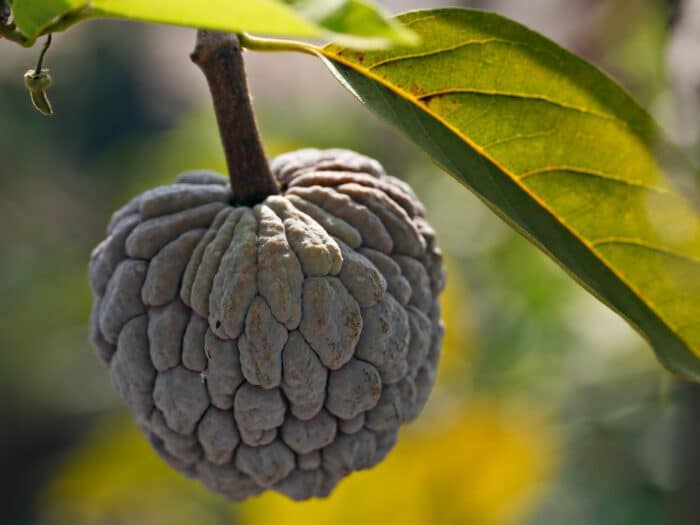
This is a delicious exotic fruit originally from South America, prized for its delicate creamy flesh with a sweet taste resembling a combination of banana, pineapple, and strawberry, which has earned it the nickname “custard apple.” The fruit has green skin and white flesh with large hard black seeds that must be removed before eating. The fruits are sensitive to storage and spoil quickly.
Nisperos
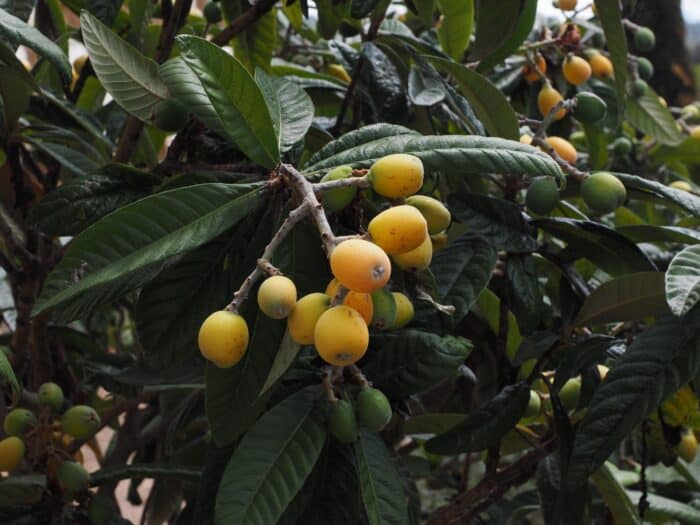
Nisperos are the fruits of the Japanese loquat. They are about the size of a small apple, oval to pear-shaped, with golden-yellow to orange skin. Inside is soft, juicy flesh with a mildly sweet taste resembling a mix of peach, apricot, and plum, and several large brown seeds.
Prickly pear
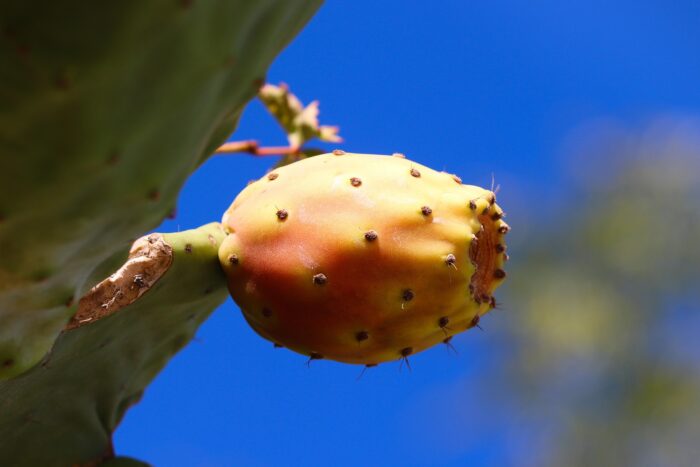
The fruits of the prickly pear cactus, which grows abundantly in Tenerife, are also called cactus figs. They are deep pink and sweet, used to make jams, juices, and liqueurs. You can pick them from the wild cacti on the island, but you have to be careful of their many fine spines. It’s easier to buy de-spined prickly pears in a shop. Cut off the ends of the fruit and slice the skin lengthwise, or cut them in half and eat with a spoon.
Canarian bananas
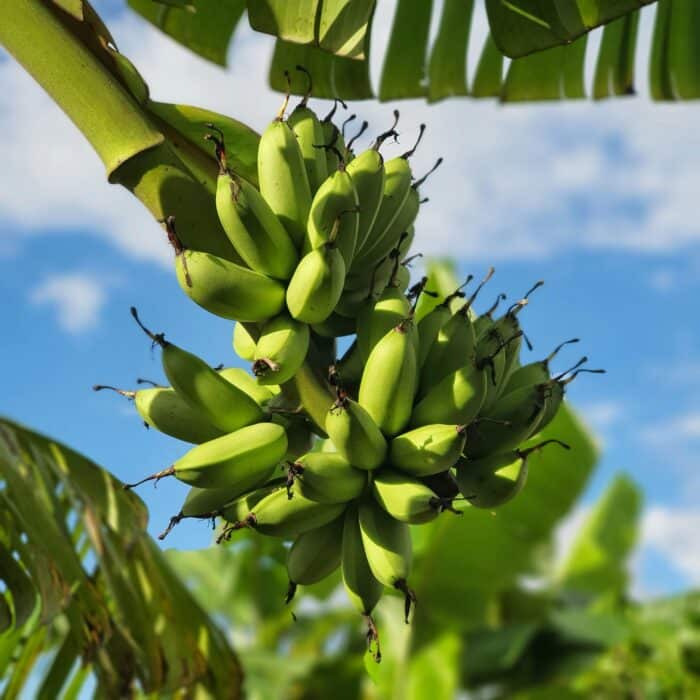
Canarian bananas belong to the Cavendish variety. They are smaller than common bananas in Europe but stand out with a more intense flavor. They are grown mainly in Tenerife and La Palma, and besides direct consumption, they are used to make banana liqueur or a sweeter banana wine, vino de plátano, which doesn’t taste like bananas themselves. The cultivation and processing of this crop is also showcased at the Casa del Plátano museum in Icod de los Vinos.
Aloe vera
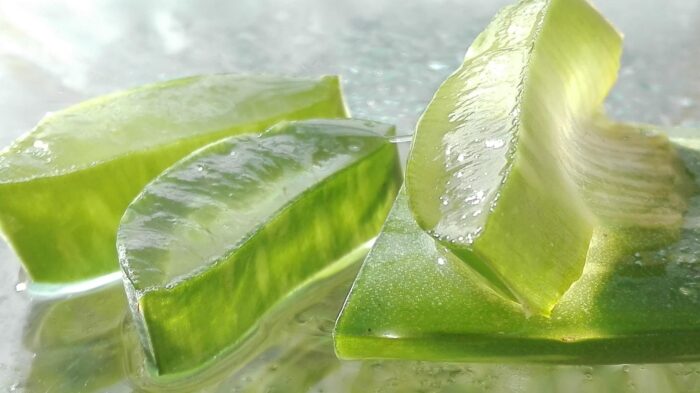
Aloe vera is one of the typical plants of the Canary Islands. In the kitchen, it appears only marginally, mainly in fruit jams or desserts because it has a slightly bitter taste, but it is extremely popular in cosmetics.
Tip:
Buy fruit at local markets, where a diverse selection of seasonal produce is sold directly from growers and in really good quality.
Other
Gofio
Gofio is a coarsely ground flour made from roasted grains of various types, such as wheat, corn, or a cereal mix. Thanks to its nutritional value, it was an important part of the diet for Canary Island residents during the Spanish Civil War. Gofio is added to many dishes in Tenerife, used to thicken sauces, and used to make sweets. Locals also enjoy adding it to their morning glass of milk.
Tenerife honey
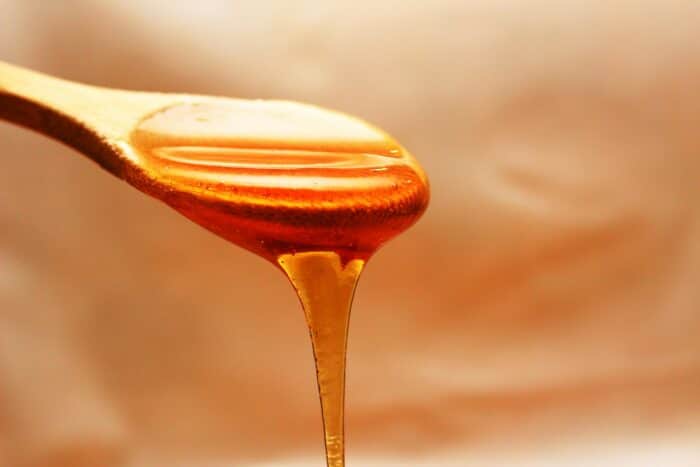
Tenerife honey stands out with its delicate aroma thanks to the diverse local flora. Varieties like avocado, eucalyptus, or chestnut honey are produced with bold flavors, which are popular in combination with majorero goat cheese.
Sea salt

Sea salt from Tenerife is traditionally obtained by evaporating seawater in coastal salt pans. Thanks to the clean ocean and sunny climate, it has a delicate, natural taste and often retains a higher mineral content. In local cuisine, it’s used to season fish, papas arrugadas, and simple vegetable dishes.
Drinks
Barraquito
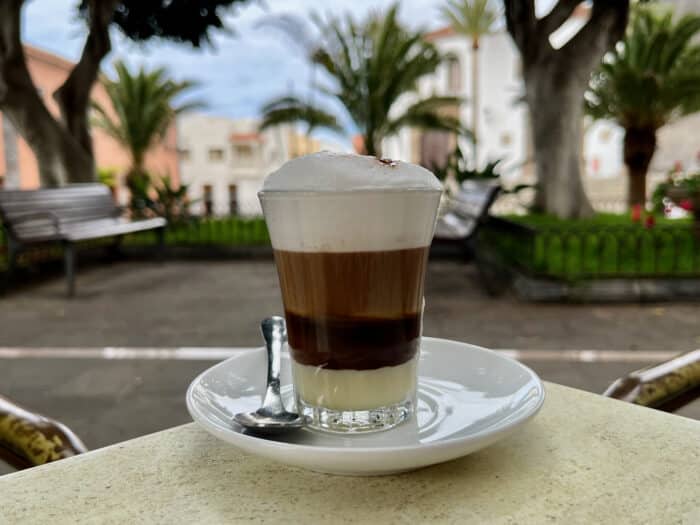
This is a traditional Tenerife layered coffee drink. Its base is espresso, condensed milk, Spanish vanilla liqueur, and milk foam, flavored with cinnamon and lemon zest. The individual ingredients form layers, giving the resulting drink its striped appearance. Its simpler version is café bombón with just two layers of coffee and condensed milk.
Local wines
Local wines from the Tacoronte-Acentejo and Valle de la Orotava regions are particularly prized.
Malvasía
This dark, sweet wine has a rich fruity flavor with a mineral character thanks to the volcanic soil in which the vines grow. It’s produced in sweet and semi-dry variants. The Malvasía grape variety was brought to the Canary Islands as early as the 15th century. Lanzarote specializes primarily in the production of this wine.
Banana wine
Banana wine from Tenerife is a refreshing, semi-sweet alcoholic drink made from local Canarian bananas, offering a distinct banana flavor with a lightness similar to regular wine. It’s suitable for appetizers, fish, or desserts. It’s produced by local wineries and often sold as a fresh Afrutado or sparkling Frizzante.
Banana liqueur
A traditional Canarian sweet liqueur known as licor de plátano is made from local bananas, spices, and vodka or another clear spirit. It’s known for its intense banana flavor. It’s often served ice-cold, on its own or in cocktails, such as the Barraquito.
Ron miel (honey rum)
Honey rum has a sweeter and smoother taste than regular rum because honey is added to it.
Beer
In the Canary Islands, you’ll find two types of local beer: Tropical and Dorada. This local beer is quite strong.
Sangría
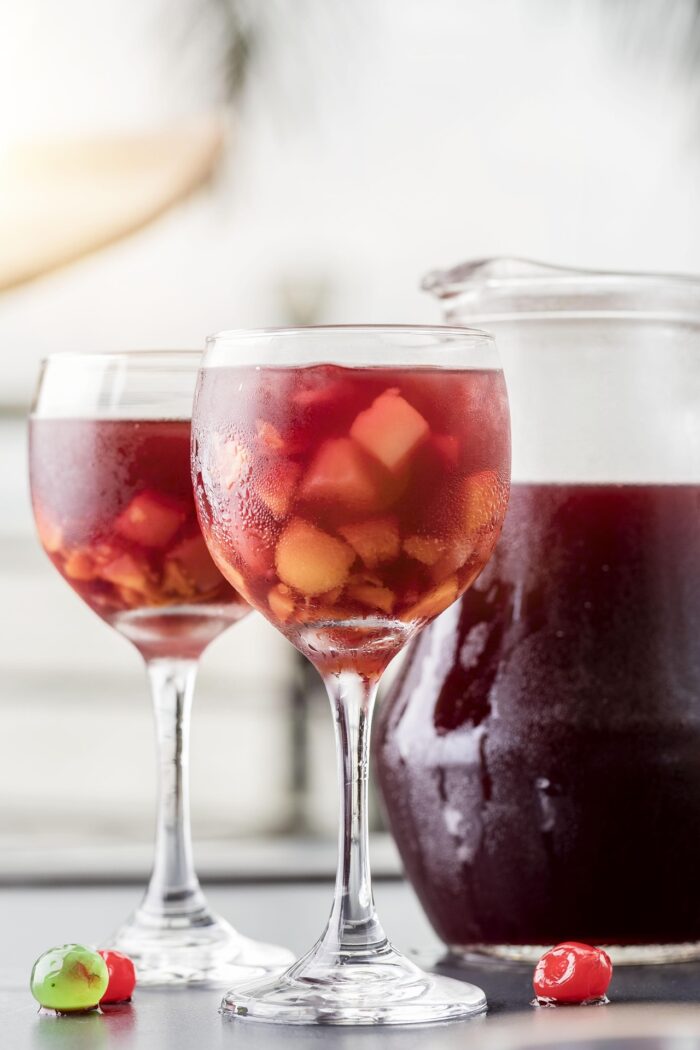
This is a variant of wine punch based on red wine, mixed with various spirits. Typical Tenerife sangría is recognized by the added banana liqueur and pieces of fresh banana.
Where to eat well in Tenerife
If you want to experience authentic Tenerife cuisine, guachinches are a safe bet—unofficial family taverns far from tourist routes, primarily in the north of Tenerife. Local people sell their wine here along with matching homemade dishes. They usually don’t have a menu, and the daily special is whatever the cook just made. Prices here are usually very reasonable.
If you want to enjoy fish and seafood, also look for beach bars called Chiringuitos.
Tip:
Menu del día is a lunch special that many restaurants serve roughly between 1 PM and 4 PM. For a significantly lower price than in the evening, you usually get several courses, a drink, and sometimes coffee.
Tenerife Guide
Read about what to do, experience, and see in Tenerife: Tenerife Guide – 46 best tips on what to see and do in Tenerife
Flights to Tenerife
Smartwings and Eurowings fly direct from Prague to Tenerife South Airport (TFS) 5 times a week; the flight takes 5 hours and 25 minutes. Tickets can be found from 5,000 CZK. You can compare current flight prices here.
Accommodation in Tenerife: where to stay if you want to eat well
If you want to truly explore Tenerife’s cuisine, it’s worth choosing accommodation based on food, not the pool. The most authentic experiences await you in North Tenerife, where you’ll find guachinches, local vineyards, and family restaurants cooking with local ingredients. Areas like Puerto de la Cruz, La Orotava, or the surroundings of Tacoronte are ideal if you want to taste homemade cuisine, local wines, and traditional sweets without tourist prices.
If you prefer cooking for yourself, apartments with a kitchenette are a great choice—you can buy fresh fish, fruit, or cheeses at the markets and prepare simple Canarian dishes yourself.
Accommodation in Puerto de la Cruz
A highly-rated and very affordable accommodation with a kitchenette is Estudio Edificio Emblemático Primera Línea in Puerto de la Cruz. A year-round outdoor pool is available here, and Playa de Martiánez beach is just 200 meters away. The only complication might be the parking lot located 1.4 km from the accommodation. The price for a week’s stay at the time of writing this article is 9,330 CZK.
Casa TATIANA is an excellently rated apartment with a kitchenette, outdoor pool, and terrace. The apartments have pool and garden views. Playa Jardín beach is only 400 meters away. The price for a week’s stay at the time of writing this article is 11,730 CZK.
Cerca de Playa Jardín is an excellently rated budget apartment with city views in a quiet location near the center of Puerto de la Cruz. Playa El Muelle beach is located just 400 meters from the accommodation. The price for a week’s stay at the time of writing this article is 11,390 CZK.
Another very pleasant option is Casa Sunset in Puerto de la Cruz, an excellently rated two-bedroom apartment with a kitchen, which has a garden and a balcony with mountain views, and can be stayed in for a reasonable price. There’s also an outdoor pool and free private parking. It has a wonderful view of Mount Teide, but keep in mind that the apartment is on a hill. Playa Jardín beach is only 800 meters from the apartment. And you even get a bottle of sparkling wine as a welcome gift.
My personal favorite is a budget apartment with heating (ideal if you’re cold at night like me), a kitchen, terrace, free parking, and a private pool, Apartamento Sandra, which is located near the sea. The price for a week’s stay at the time of writing this article is 17,392 CZK.
Read about what to see in Puerto de la Cruz in this article: Puerto de la Cruz Tenerife: 32 things to see here, beaches, restaurants, and hotels
Accommodation in Orotava
The budget apartment Live Orotava Antigua Attic National Heritage offers a kitchenette and a terrace with city views. The price for a week’s stay at the time of writing this article is 13,090 CZK.
Another budget option is the La Casita de Descanso apartment, which has a kitchen, terrace, and free parking. The price for a week’s stay at the time of writing this article is 13,297 CZK.
If you’re traveling with more people, you can stay at Casa Teide, which offers three bedrooms for up to six people. You’ll find a kitchen, balcony, terrace, and a beautiful view of the Orotava Valley. The price for a week’s stay at the time of writing this article is 15,229 CZK.
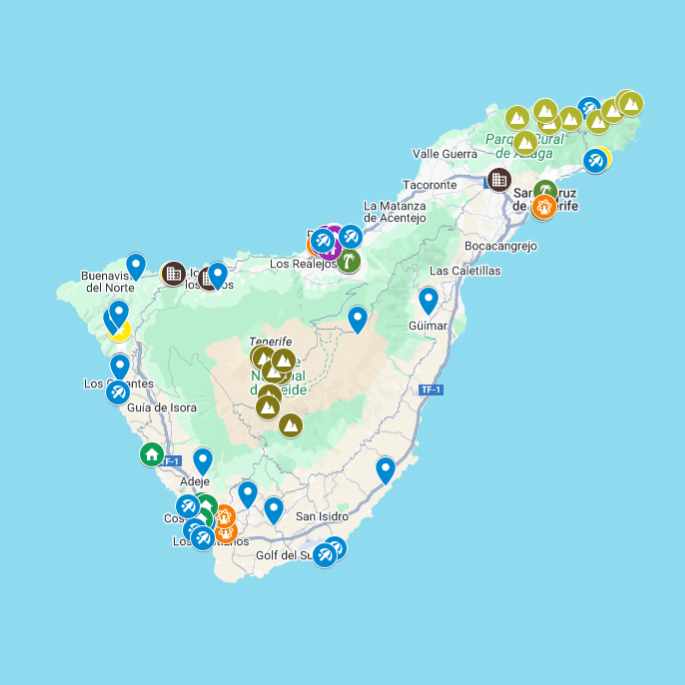
Downloadable map of Tenerife with interesting places and recommended accommodation marked
I’ve prepared a detailed digital map for you, where you’ll find over 50 things worth seeing in Tenerife. These are the ones I write about in this article. You’ll also find various accommodation options in it. You can download it for the price of one Prague beer 🙂
Trip to Tenerife
Don’t want to worry about anything? Buy a trip to Tenerife with yoga by the Atlantic and a climb up El Teide flying from Prague. You’ll explore the historic center of Puerto de la Cruz, head to the Las Cañadas del Teide National Park, and experience an adrenaline-filled drive across the crater floor and through the Masca mountain gorge. You’ll go on a trek around the El Chinyero volcano, see the beautiful corners of Orotava, enjoy a trek in the Anaga mountains with a visit to the cave village of Chinamada, and discover San Cristóbal de la Laguna with its UNESCO-listed historic center. And in between, you’ll have a nice stretch with a yoga instructor.

Ahoj, já jsem Hela. Cestování je pro mě radost i detektivní práce zároveň. Před každou cestou totiž nadšeně prozkoumávám všechno, co se o daném místě dá zjistit, od zajímavostí a historie až po praktické detaily, které se při plánování opravdu hodí.
Právě proto vznikla Všudybylka. Sdílím tu přehledné průvodce, tipy na ubytování, nápady kam vyrazit v různých částech roku i recenze cestovatelského vybavení, které mi na cestách skutečně pomohlo.
Když zrovna necestuji, najdete mě zabranou do dobré fantasy nebo sci-fi knihy s některou z mých pěti potkanek na rameni.