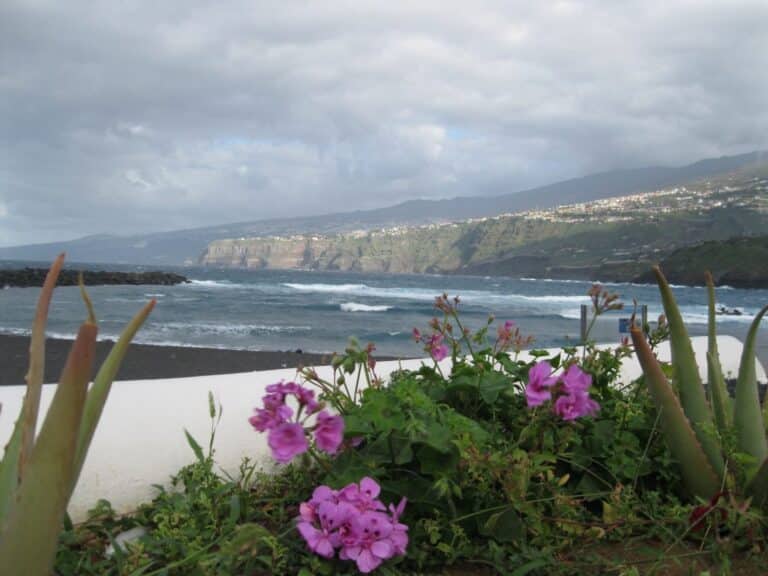
The Anaga Mountains feel like a place that escaped time. Green ridges shrouded in mist rise above the ocean, old laurel forests rustle just as they did millions of years ago, and narrow paths disappear among ferns and twisted tree trunks. When you enter, you feel as if you’ve stepped into another world—wilder, quieter, and more authentic than the rest of Tenerife. Anaga isn’t just a mountain range. It is one of the last living fragments of ancient nature that existed here long before the first humans arrived on the island.
Parque Rural de Anaga, covered in lush laurel forests, is a UNESCO Biosphere Reserve. A network of well-marked trails offers magical walks where you can admire dramatic ravines, steep cliffs, and views of the Atlantic. Laurel, juniper, and heather give the air a special spicy scent.
The Anaga Mountains are one of the oldest parts of Tenerife, formed 7–9 million years ago. The original inhabitants of the Canary Islands, the Guanches, lived here, and their ancient cave dwellings are still preserved today. In 1987, Anaga was declared a natural park; in 1994, this classification was changed to a rural park; and since 2015, it has been a UNESCO Biosphere Reserve. And deservedly so. It is the area with the highest concentration of endemic species in Europe, home to over 2,000 species of plants and animals.
The lush laurel forest is a living fossil
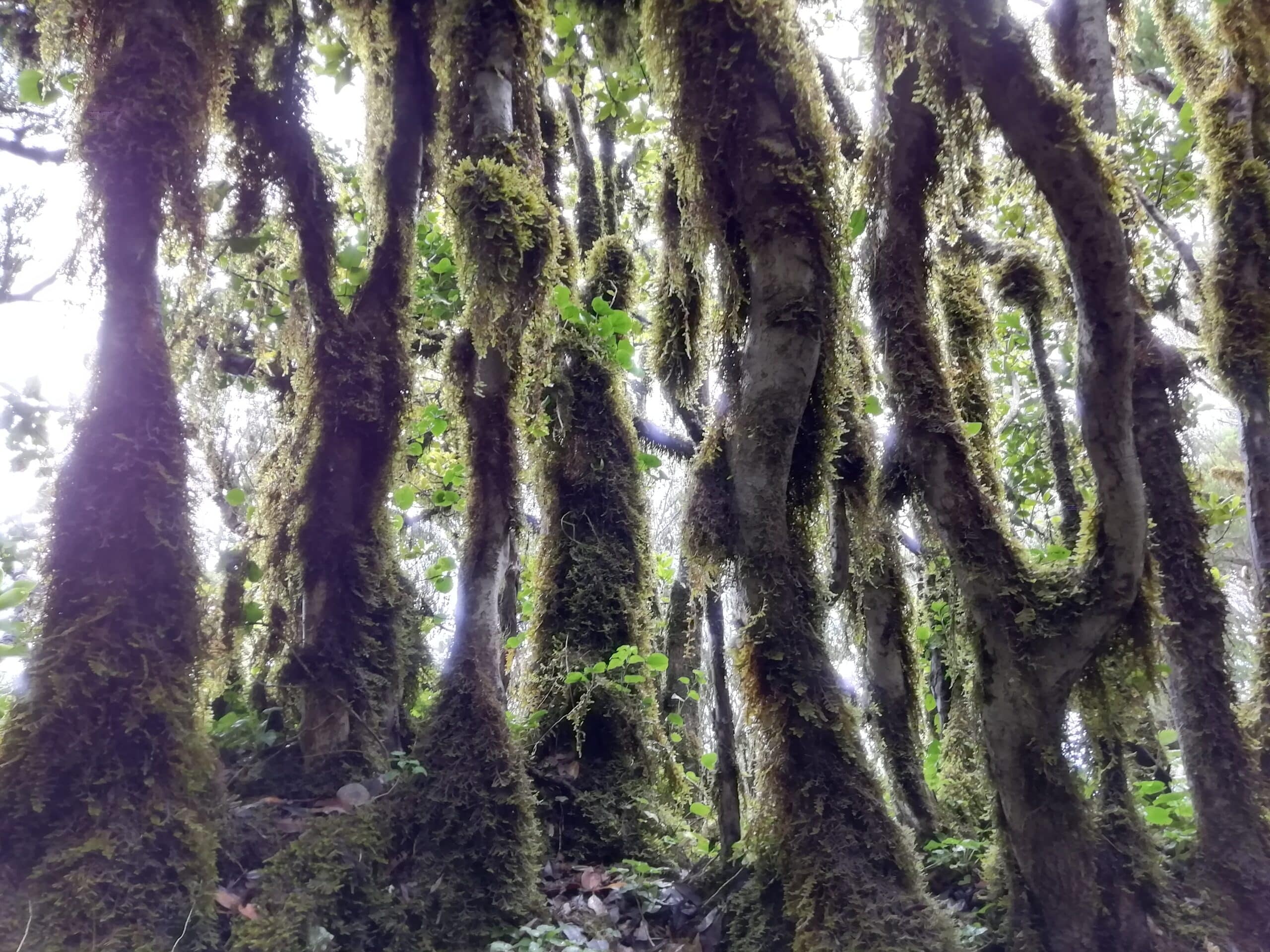
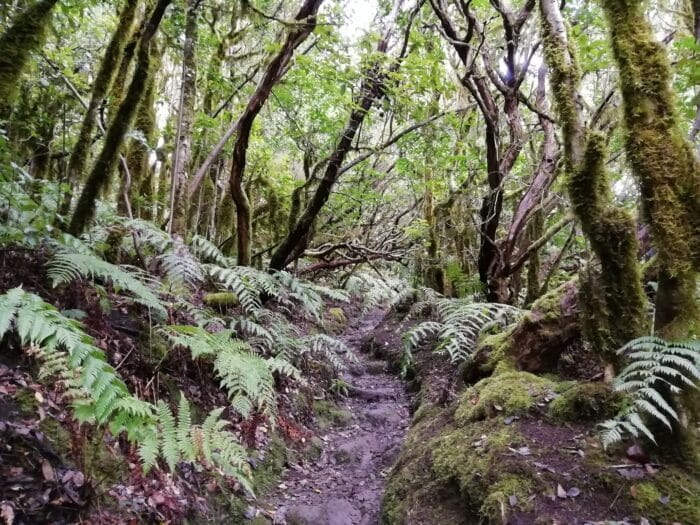
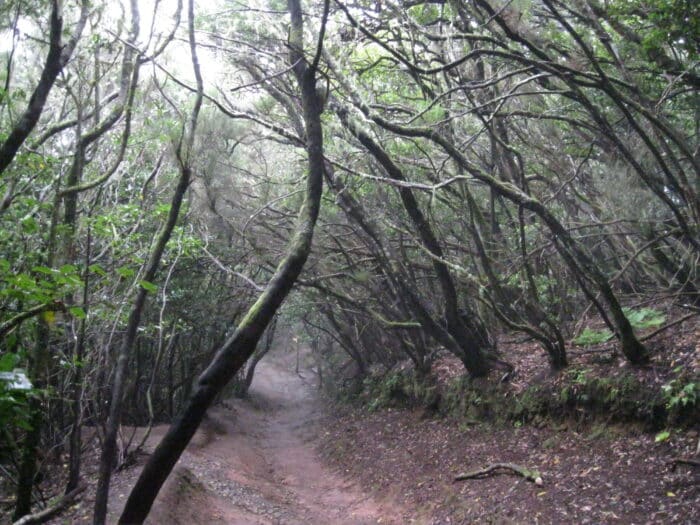
The rich, misty laurel forest, also called laurisilva, is considered a living remnant of the distant past, allowing you to experience a landscape almost exactly as it was millions of years ago. These dense, humid forests are remnants of the Tertiary forests that once covered southern Europe and North Africa. Today, these primary forests are preserved only in certain parts of Macaronesia, such as the Canary Islands, Madeira, or the Azores. Tall trees covered in moss and ferns, with their tops peeking out of the mist, create a magical atmosphere. The mist provides moisture to the local forests while also adding a touch of mystery.
Anaga is more humid and greener than the rest of the island because it catches the moist trade winds coming from the northeast. When they hit the mountain ridges, the moisture condenses and falls as rain and mist, while it no longer penetrates to the other side of the range.
Archaeological sites and witches’ gathering grounds
The highest peak in Anaga is Cruz de Taborno at 1,024 meters. Other peaks include Bichuelo, Anambro, Chinobre, Pico Limante, and Cruz del Carmen. Anaga is also rich in archaeological sites. The most famous find is the Mummy of San Andrés, the mummified remains of one of the original Guanche inhabitants.
Until the 1950s, some villages in the Anaga Mountains were accessible only on foot or by sea, allowing them to preserve a traditional way of life almost unchanged. In Chinamada, there are still inhabited cave dwellings that represent a remarkable example of how people managed to adapt to harsh natural conditions.
In a mountain spot called El Bailadero, witches were said to have once danced around fires and cast spells. Anaga also has a cryptozoological legend: a giant eel supposedly lived in a pond at Punta de Anaga and terrified the villagers.
Cruz del Carmen
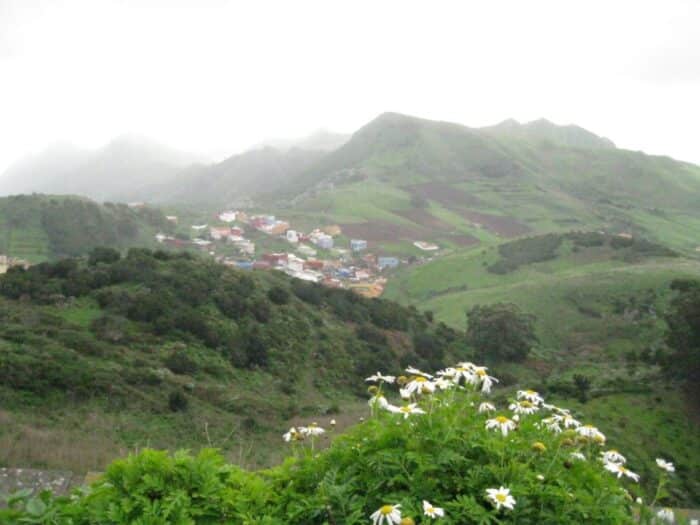
The gateway to Anaga is Cruz del Carmen, where you’ll find a visitor center (Centro de Visitantes Cruz del Carmen), parking, and a viewpoint from which you can admire the surrounding mountains and, on clear days, the capital Santa Cruz. In the visitor center, you’ll also find an interactive exhibition about local nature, culture, and the traditional way of life. They even sell warm clothing if you didn’t bring your own. It’s significantly colder here than on the coast, which often catches unprepared tourists by surprise. There is also a restaurant, though it is often full. Several marked trails start from Cruz del Carmen, including the Path of the Senses, which is suitable for families with children.
Trails and hiking routes
Sendero de los Sentidos: Path of the Senses
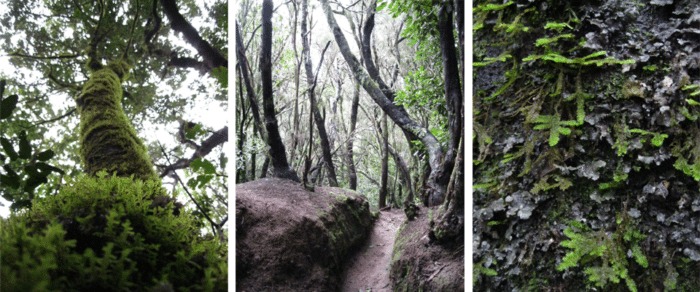
This 1.3-kilometer trail, consisting of maintained paths and wooden walkways, runs as a loop from Cruz del Carmen and back. It is easily accessible for families with children or visitors with limited mobility. You can walk it in an hour, and the elevation gain is minimal. It is lined with signs featuring images of the individual senses: Look around here, listen here, take a breath here… They invite you to stop, listen to the whisper of the forest, breathe in the damp air, touch the rough bark of the trees, and notice the small miracles hidden in this ancient forest.
The trail is complemented by information boards where you can learn, for example, that forests like the one in the Anaga Mountains capture airborne moisture and return water to the landscape—water that is gradually disappearing from Tenerife due to deforestation. After rain, careful walking is necessary as the muddy path gets quite slippery. The trail also has a shorter variant that can be navigated with a stroller or wheelchair.
You can read more here about my trip to the Path of the Senses.
Enchanted Forest Trail
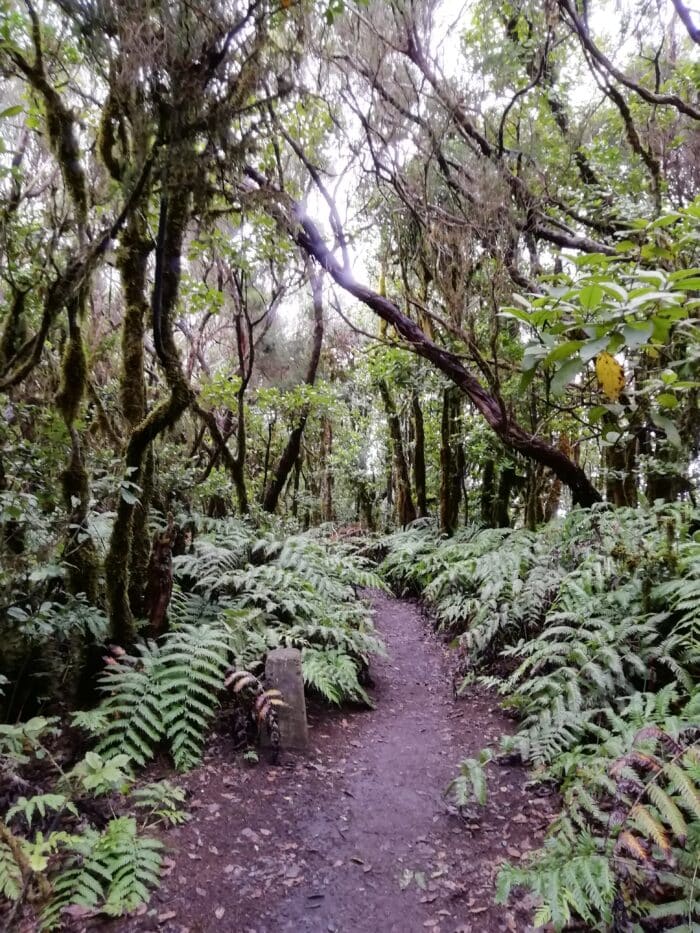
Access to this trail must be booked online at least fourteen days in advance, as only 45 people per day are allowed to prevent damage to the rare nature. Thanks to this, you practically have the trail to yourself. At the end of the trail is a mirador, a viewpoint where you can enjoy the slopes of the surrounding mountains. Small birds fly here and will even let you feed them from your hand.
You can read about my trip to the Enchanted Forest trail here.
You can book a trip to this trail here, including transport from the southern and eastern parts of Tenerife.
Benijo – Faro de Anaga
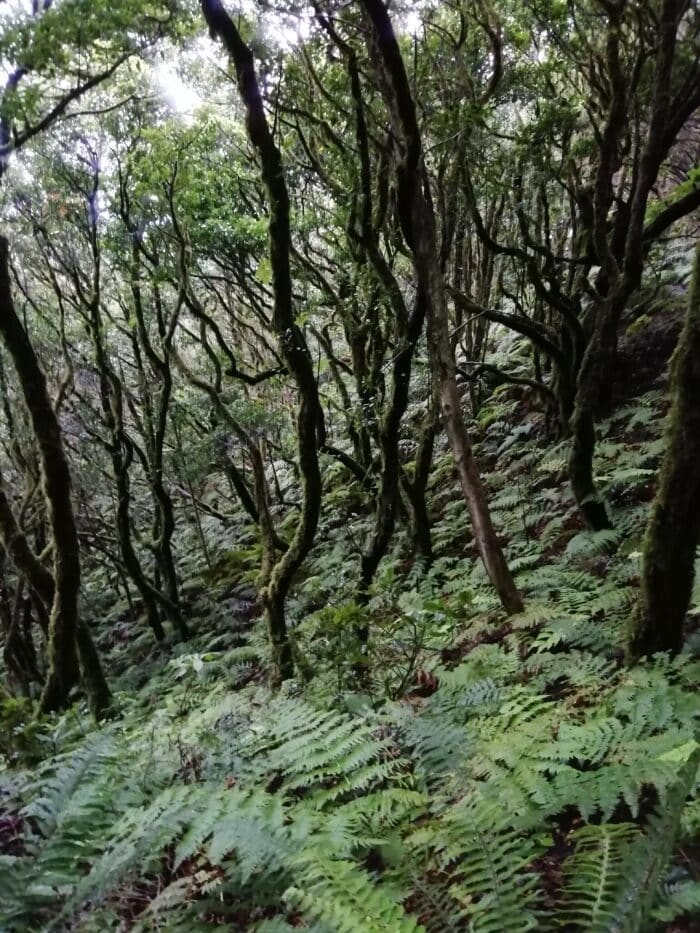
If you’re drawn to wild coastal scenery, one of the most beautiful routes is the approximately five-kilometer trail leading from Benijo beach to the Faro de Anaga lighthouse, located on the northernmost tip of Tenerife.
This moderately difficult trail takes you along the dramatic coastline, steep cliffs, and black volcanic beaches. On a clear day, you can see all the way to Gran Canaria. There are few shaded spots on the trail, so a hat and plenty of water are a must.
Benijo Loop Trail
A short loop trail also starts from Benijo, first heading along the sea before turning into a short but steep climb to a spot with a beautiful view. The trail then winds back to Benijo over several smaller hills.
PR-TF 6: Chamorga – Faro de Anaga Loop
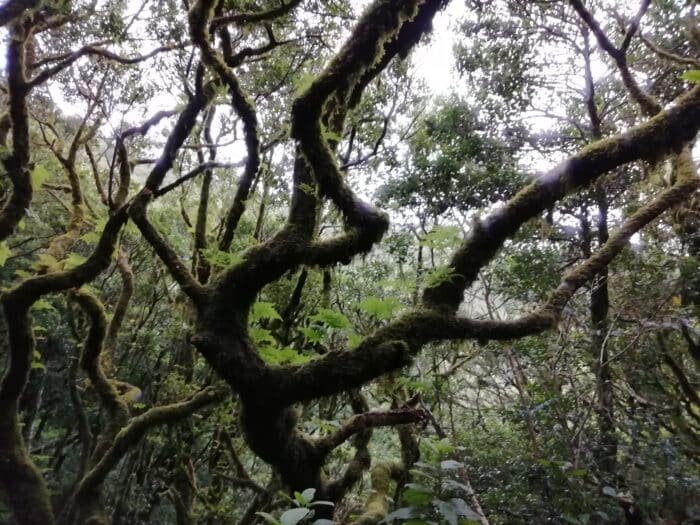
This relatively easy, 4.5 km long loop takes about two hours to complete. It leads you through dense forests and open landscapes with ocean views, and along the way, you can admire the Roque de Dentro rock formation. It is one of the quieter and less visited parts of Anaga.
It is a pleasant circular route that begins with a gradual climb and later turns sharply down in switchbacks toward the Faro de Anaga lighthouse. Impressive panoramic views of the mountains and ocean accompany you the whole time.
The route starts at the square in the village of Chamorga and gradually climbs toward the El Pilón rock formation. From there, it continues through the Paso de la Burra pass and leads via steps carved into the rock to the abandoned Casas de Tafada houses, which today serve as a silent reminder of the past.
A descent follows around Mount Tafada to the La Asomada viewpoint, which opens up a magnificent view of the Roques de Anaga rock towers and the lighthouse itself. The trail then continues down to the historically first maritime facility to operate on Tenerife.
Transport:
- Getting there: bus from the Intercambiador Santa Cruz transport terminal to Chamorga (line 947).
- Getting back: bus from Chamorga via the same line 947, or return from Almáciga via line 946.
PR-TF 10: From Cruz del Carmen to Punta del Hidalgo
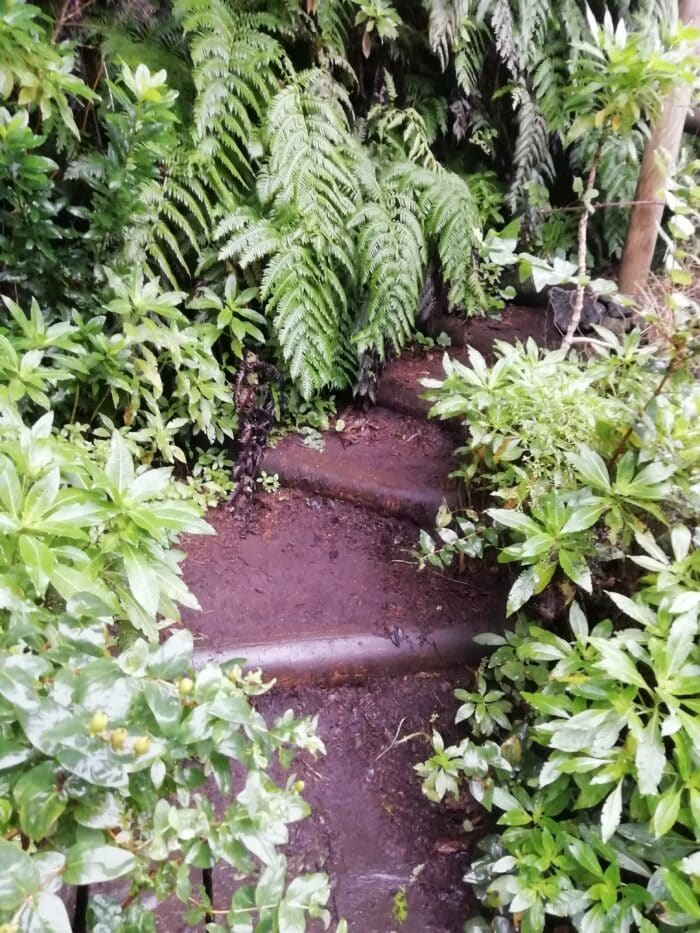
This ten-kilometer route with medium difficulty takes you through three different types of vegetation. The trail starts to the right of the Cruz del Carmen restaurant and gradually descends through the ancient Monteverde laurel forest. It crosses the road several times along the way and leads to the mountain village of Las Carboneras. From there, it continues to Chinamada and finally descends to Punta del Hidalgo along a narrow path carved into the cliffside. The elevation gain is 916 meters, and the path follows hiking trails, forest paths, and requires walking along the road a few times. You can complete it in about four hours. The trail is one-way, so you need to plan for transport back.
Transport:
- Getting there: bus (guagua) from the Intercambiador La Laguna transport terminal to Cruz del Carmen – line 273.
- Getting back: bus from Punta del Hidalgo to Intercambiador La Laguna – line 105.
Villages
Taganana: one of the oldest villages in Tenerife
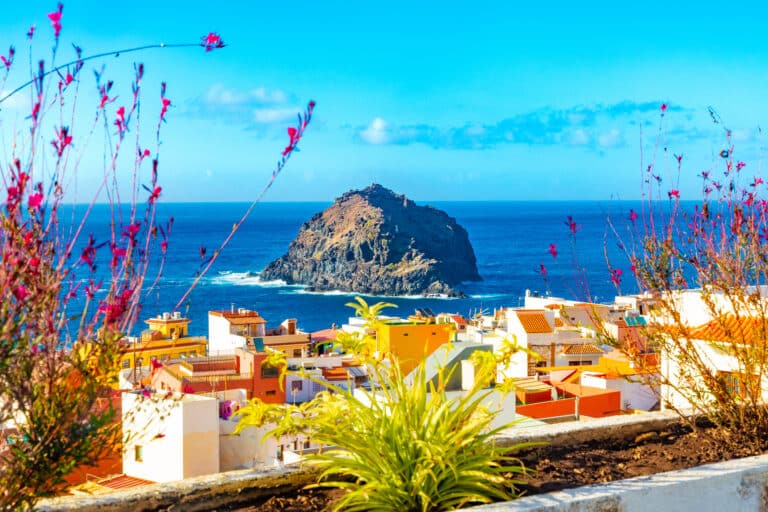
Taganana is one of the oldest and most picturesque villages in Tenerife. It was founded at the end of the 15th century, shortly after the Spanish conquest of the island, and has preserved its original character to this day. White houses with red roofs are scattered across the slopes of a deep valley, surrounded by steep green mountains that protected the village from the outside world for centuries.
The journey to Taganana is an experience in itself. The road winds through the mountain landscape and leads through the ancient Las Mercedes laurel forest, one of the oldest ecosystems of its kind in Europe. As you begin to descend into the valley, views of the dramatic landscape open up, where the mountains gradually meet the ocean.
The village’s landmark is the 16th-century Church of Nuestra Señora de las Nieves, one of the oldest churches in Tenerife, as well as the smaller Santa Catalina hermitage. Taganana’s ethnographic importance is evidenced by the caves and rock hollows that people have used as dwellings and farm spaces for generations, as well as the historic Portugal district, which still retains the atmosphere of times gone by.
Taganana is also an ideal starting point for exploring Anaga’s wild coast. Nearby are the beaches of Benijo and Almáciga, known for their black volcanic sand, dramatic rock formations, and the power of the Atlantic Ocean. After visiting the village, it’s worth stopping at one of the local restaurants, such as Casa Picar, to taste traditional Canarian cuisine.
You can get to Taganana by car or by bus No. 946 from the Intercambiador Santa Cruz transport hub toward Almáciga. The journey itself will show you why this part of Tenerife is among the most exceptional.
Chinamada: the village where people still live in caves
The village of Chinamada is best known for its rock dwellings—caves hollowed out of the stone. It is a historic settlement with roots reaching back to the island’s original inhabitants. Approximately thirty cave houses are preserved here today in very good condition; they have great ethnographic value, and some are still inhabited. You can head to the viewpoint or sit in the local traditional restaurant, La Cueva, where you can sample local specialties.
The tradition of living in caves dates back to the island’s original inhabitants, the Guanches. The caves provided natural protection from the heat, wind, and humidity, maintaining a stable temperature year-round. Later generations modified and adapted them to modern life, but their original character has been preserved.
Chinamada lies on the edge of a steep valley, offering magnificent views toward the coast and Punta del Hidalgo. The surrounding landscape is dramatic and wild, with deep ravines, green slopes, and cliffs dropping to the ocean. It is from here that one of the most beautiful hiking routes in Anaga descends from the mountains to the sea.
You can book a guided trip to Chinamada here.
San Andrés: a historic village at the foot of the Anaga Mountains
San Andrés is one of the oldest villages in Tenerife, located on the coast just about 7 kilometers northeast of Santa Cruz de Tenerife, at the foot of the green Anaga mountains. It was founded around 1498, shortly after the Spanish conquest of the island, and still retains the atmosphere of a traditional fishing settlement.
The area was inhabited long before the arrival of the Spaniards by the island’s original inhabitants, the Guanches. According to historical sources, one of the caves where the Guanche ruler of the Anaga region lived was located in the San Andrés valley. The famous San Andrés mummy was also discovered in one of the local caves, and it is now one of the most significant archaeological finds in Tenerife.
The village also played an important role in later history. In the 16th century, the Church of Saint Andrew (Iglesia de San Andrés) was built here and still stands today. On the coast, you’ll also find the Castillo de San Andrés, which protected the island from pirate attacks. This area was once a frequent target for pirate ships, which used the local bay as a landing site.
Today, San Andrés is a peaceful place with colorful houses, a small fishing port, and an authentic atmosphere. It is also home to the famous Las Teresitas beach, whose golden sand was imported from the Sahara in the 1970s. The village thus represents a unique blend of rich history, the dramatic mountain landscape of Anaga, and the beautiful Atlantic coast.
Punta del Hidalgo: natural pools on a wild coast
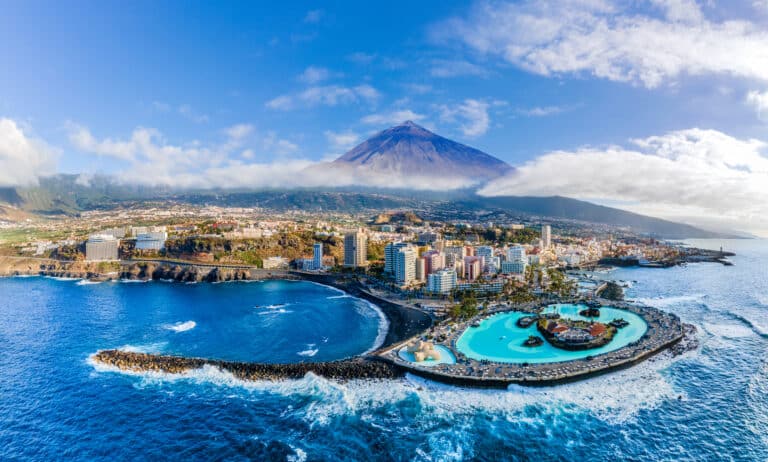
Punta del Hidalgo is one of the most famous and visited spots on the coast of the municipality of San Cristóbal de La Laguna. The local natural seawater pools have been awarded the Blue Flag, confirming the exceptional quality of the water and services provided. The pools are safe and ideal for swimming. They are equipped with showers and wheelchair access, making them suitable for almost everyone. Lifeguards monitor the safety of swimmers here.
In addition to swimming, it’s worth taking a walk along the coast, which offers magnificent views of the Atlantic Ocean and, in clear weather, the silhouette of the Teide volcano in the background. Furthermore, the area is known for its excellent gastronomy, focused primarily on fresh fish and seafood, which you definitely shouldn’t miss during your visit.
Igueste de San Andrés is a small but exceptionally picturesque village located on the southern slope of the Anaga Mountains, about 16 kilometers from Santa Cruz de Tenerife. It spreads across a valley surrounded by steep mountain slopes that gradually descend to the Atlantic Ocean. Thanks to its remote location, Igueste has preserved the authentic atmosphere of a traditional Canarian village where life moves at a slower pace.
The village is known not only for its peaceful atmosphere but also for its beautiful surroundings. Nearby are several natural swimming spots, such as the beaches of Llano, El Burro, or El Porís, which are among the less visited and feel wild and untouched. Main landmarks include the Church of Saint Peter (Iglesia de San Pedro Apóstol) and the historic Anaga semaphore, which formerly served for visual communication between the coast and the interior.
The Igueste valley is surprisingly fertile thanks to its microclimate. Tropical fruit trees such as mango, avocado, and papaya grow here, giving the landscape an unexpectedly exotic character.
Natural formations and viewpoints
Roques de Anaga: rock towers rising from the Atlantic
The Roques de Anaga are prominent basalt rock formations that rise from the ocean near the coast of the villages of Benijo and Almáciga. They were formed by erosion, which over millions of years gradually wore away the surrounding rock, leaving these solitary rock towers. Today, they are among the most iconic natural landmarks of the Anaga Mountains.
The most beautiful view of them opens up from Benijo beach, where their silhouettes appear particularly dramatic, especially at sunset. The Roques de Anaga are a symbol of the wild and untouched nature of northern Tenerife and are among the most photographed spots on the island.
Roque de Taborno: the stone fortress of the Anaga Mountains
Roque de Taborno is one of the most distinctive rock formations in the Anaga Mountains and is often nicknamed the “Matterhorn of Tenerife” due to its steep, dramatic shape. This 706-meter-high basalt tower was formed by gradual erosion that wore away softer surrounding rocks over millions of years, leaving behind only the hard rock core. The result is a solitary rock massif that towers over the surrounding landscape like a natural fortress—hence its original name, Fortaleza de Taborno.
The rock is located near the small mountain village of Taborno, one of the most remote settlements in Anaga. A loop trail starts from here, circling Roque de Taborno, and is one of the most beautiful hiking routes in this part of the island. The route is approximately three kilometers long and offers constantly changing views of deep ravines, steep slopes, and the distant Atlantic. in some places, the path is narrow and runs along steep drops, giving it an adventurous character.
Panoramic views of the entire Anaga massif, the coast, and surrounding villages open up from the upper parts of the neighboring ridges. In clear weather, it’s even possible to spot the Teide volcano.
Mirador Pico del Inglés: one of the most beautiful viewpoints in the Anaga Mountains
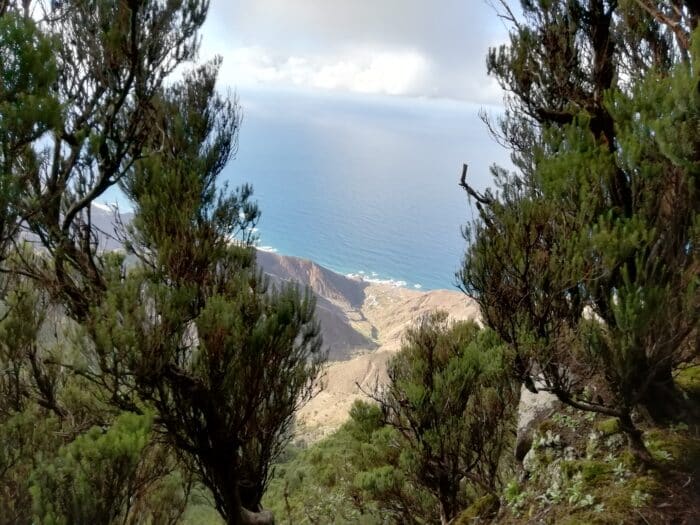
Mirador Pico del Inglés is one of the most impressive viewpoints in the Anaga Mountains. It is located at an altitude of nearly 1,000 meters above sea level and offers a wide panoramic view of green mountain ridges, deep valleys, and the northern coast of Tenerife. In clear weather, it’s possible to see the Teide volcano towering over the island from here.
The viewpoint is easily accessible by car and lies near the road connecting La Laguna with Cruz del Carmen. The spot is known for its peaceful atmosphere and is often shrouded in mist, which gives the landscape a mysterious touch. Mirador Pico del Inglés is an ideal place for a short stop during a trip through Anaga and is one of the best places to admire the wild beauty of these mountains.
Faro de Anaga: a lighthouse at the end of the mountains and the edge of the world
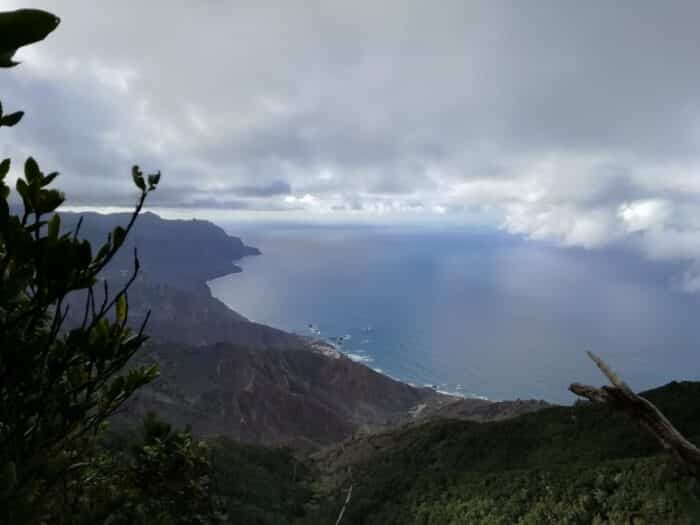
Faro de Anaga is a solitary lighthouse standing on the northeastern tip of Tenerife, at the point where the Anaga Mountains end and transition into the open Atlantic. It was built in 1863 and still serves as a navigation point for ships sailing along the wild coast. Its white silhouette contrasts with the dark rocky slopes and the deep blue of the ocean.
Getting here isn’t exactly easy, which is part of its charm. The most common route is on foot from the mountain village of Chamorga along a hiking trail that offers magnificent views of the dramatic coastline, rock formations, and the ocean. It is precisely because of its remoteness that Faro de Anaga is one of the quietest and most authentic places on the island.
The surrounding landscape feels raw and untouched, with no signs of modern development. It’s a place where you feel like you’re standing at the end of the world, surrounded only by mountains, wind, and the endless ocean.
Beaches
Roque de las Bodegas: a wild beach on the edge of the Anaga Mountains
Roque de las Bodegas is a small coastal settlement and beach located on the northern edge of the Anaga Mountains, near the village of Taganana. This place is one of the most authentic and least touched parts of Tenerife. Here you’ll find a wide beach with dark volcanic sand, dramatic rock formations, and the ever-present power of the Atlantic Ocean, which hits the coast here with full intensity.
The beach is popular with locals and surfers but has maintained a quiet and natural atmosphere. Unlike tourist resorts, you won’t find large hotels or promenades here, just a few traditional houses and restaurants. It is this simplicity that makes Roque de las Bodegas feel authentic and raw.
The surrounding landscape is made up of steep mountain slopes that rise directly from the ocean, creating a unique scenery typical of northern Anaga. The spot is ideal not only for swimming but also for walks along the coast or watching the sunset, when the black sand and rocks turn warm shades.
Roque de las Bodegas is also a great starting point for exploring other places in Anaga, including the beaches of Benijo and Almáciga or mountain villages hidden high on the slopes. You can get here from Taganana in a few minutes’ drive or a short walk.
Benijo Beach: the wildest and most photogenic beach in Tenerife
Playa de Benijo is one of the most beautiful and dramatic beaches in Tenerife. It lies on the northern coast of the Anaga Mountains, near the villages of Taganana and Almáciga, and is known for its black volcanic sand, wild waves, and prominent rock formations rising from the ocean.
The beach feels raw and untouched. You won’t find hotels or promenades here, just open landscape, the sound of the ocean, and mountains that rise steeply above the coast. The most striking feature is the Roques de Anaga rock towers, which rise from the water and create one of the most iconic scenes on the island.
Benijo is a favorite spot for photographers, especially at sunset when the sky turns shades of orange and red and the silhouettes of the rocks stand out against the horizon. However, due to strong currents and waves, swimming may not always be safe, so it’s important to be cautious.
You can reach the beach via a stone staircase from the parking lot above the coast. Several traditional restaurants are also located nearby, where you can have fresh fish and enjoy the ocean view. Playa de Benijo is an ideal place for those who want to experience the wild and authentic face of Tenerife.
Playa de Roque Bermejo: a remote beach at the end of the world
Playa de Roque Bermejo is one of the most remote and least visited beaches in Tenerife. It is located on the northeastern tip of the Anaga Mountains, where the mountains suddenly end and transition into the open Atlantic. The beach is made of dark pebbles and surrounded by steep rocky slopes that give it a sense of total isolation.
Getting here isn’t exactly easy, and that’s part of its charm. The most common route is on foot from the village of Chamorga along a hiking trail that offers magnificent views of the wild coast. The Faro de Anaga lighthouse, one of the most remote lighthouses on the island, is also located nearby, completing the atmosphere of this forgotten place.
Playa de Roque Bermejo is ideal for those seeking peace, quiet, and authentic nature without the tourist crowds. You won’t find any services or restaurants here, just the ocean, the mountains, and the feeling that you’re at the end of the world.
Playa de Antequera is one of the most remote and beautiful beaches in Tenerife. It lies on the northeastern coast of the Anaga Mountains and has preserved its wild and untouched character thanks to its difficult accessibility. Unlike most beaches in this area, it has finer, lighter sand that contrasts with the dark rocky slopes and the deep blue of the ocean.
It is possible to get here only on foot via a hiking trail from the village of Igueste de San Andrés, or by boat along the coast. This isolation ensures that there are usually few people here and the place feels almost deserted. The surrounding landscape is dramatic, formed by steep mountains, deep ravines, and rocky cliffs that drop directly into the Atlantic.
Playa de Antequera is ideal for those seeking peace and authentic nature far from tourist centers. Due to strong currents and the absence of any facilities, it’s important to be careful and come well-prepared. Your reward will be the unique feeling that you’ve discovered one of the last truly wild places in Tenerife.
Playa de Almáciga: a peaceful beach surrounded by the wild Anaga landscape
Playa de Almáciga is a beautiful and peaceful beach located on the northern coast of the Anaga Mountains, near the village of Taganana. It is made of dark volcanic sand and surrounded by steep mountain slopes that reach down to the ocean. Thanks to its remote location, it has preserved a natural and authentic character, without large hotels or tourist resorts.
The beach is popular with locals and surfers because the waves here tend to be quite strong. Swimming is therefore not always safe, but the spot is ideal for walks, relaxation, and watching the ocean. Almáciga feels quieter than the nearby Benijo beach and offers equally impressive scenery of Tenerife’s wild northern coast.
Playa de Las Gaviotas: a wild beach just minutes from Santa Cruz
Playa de Las Gaviotas is a beautiful beach with dark volcanic sand, located at the foot of the Anaga Mountains, just a few minutes’ drive from Santa Cruz de Tenerife. It is surrounded by steep rocky slopes that give it a sense of isolation and create a dramatic backdrop typical of the north of the island.
Unlike the more famous Las Teresitas beach, Las Gaviotas has preserved its wild and natural character. You won’t find hotels or tourist infrastructure here, just open landscape, the ocean, and peace. The beach is popular with locals and is one of the best places to experience the authentic atmosphere of northern Tenerife.
Due to stronger waves and currents, caution is needed when swimming, but the beach is ideal for walks, relaxation, and watching the ocean. The best access is by car along the road leading from San Andrés, which offers beautiful views of the Anaga coast.
When to go to the Anaga Mountains
Thanks to the mild climate of the Canary Islands, the Anaga Mountains are pleasant year-round, with each season having its own charm. In spring, from March to May, the landscape wakes up, vegetation blooms, and temperatures are ideal for longer hikes. Summer, which lasts from June to September, can be warmer, but the mountain areas of Anaga remain significantly more pleasant than the scorching south of the island.
The autumn months, especially October and November, bring stable weather and fewer visitors, making them an ideal time for quieter exploration. In winter, from December to February, it can be cooler and rains more often, but that’s when the landscape is greenest and feels most alive.
If you want to experience Anaga in silence, it’s best to avoid weekends and holidays when more people head here. The most beautiful views are usually in the morning, as mist and low clouds often start to form over the mountains during the day, which can shroud distant scenery.
How to get to Anaga
The Anaga Mountains are located in the northeast of Tenerife, just a few kilometers from Santa Cruz de Tenerife. Although they feel remote and wild, getting here is relatively easy, whether you choose a bus, car, or organized trip.
By public transport
Regular buses (called guaguas in Tenerife) run to Anaga, connecting the main cities of Santa Cruz de Tenerife and San Cristóbal de La Laguna with mountain villages and the coast.
The most important lines include:
- Line 946: Santa Cruz → Taganana → Almáciga (ideal for visiting Benijo and Roque de las Bodegas beaches)
- Line 947: Santa Cruz → Chamorga (starting point for hikes to Faro de Anaga and Playa de Roque Bermejo)
- Line 273: La Laguna → Cruz del Carmen (main gateway to the Anaga Mountains)
- Line 105: Punta del Hidalgo → La Laguna
Buses are reliable but run less frequently than in the cities, so it’s good to check schedules in advance. The advantage is that you don’t have to worry about driving on narrow mountain roads.
By car
A rental car offers the most flexibility. It allows you to stop at viewpoints, visit remote villages and beaches, and adjust the pace to suit yourself.
Main access routes include:
- from Santa Cruz de Tenerife via San Andrés toward Taganana
- from San Cristóbal de La Laguna via Cruz del Carmen into the center of the range
The roads are narrow, winding, and very steep in places, but they offer magnificent views. Driving requires caution, especially in the mist, which is common in the mountains.
With an organized trip
The easiest option is to book an organized trip, which usually includes transport and a guide. The advantage is that you don’t have to worry about planning or driving, and you’ll also learn more about the history, nature, and attractions of the area.
The easiest option is to book a trip with pickup from your hotel, which is ideal especially if you’re staying in the south of Tenerife. Organized trips often include visits to viewpoints, mountain villages, the coast, and hiking trails.
Accommodation around Anaga
Budget accommodation
A budget accommodation option is the Albergue Montes de Anaga hostel, where a weekly stay will cost you roughly 3,000 CZK. The hostel offers accommodation in rooms for 2, 4, and 6 people. It provides guests with a living room, a dining room with a TV, a terrace with a grill, and bicycle storage.
Value-for-money accommodation
An excellently rated accommodation at a still reasonable price is Casas Galloway – Anaga Misteriosa y mágica, located in El Bailadero. A weekly stay for four people here will cost you roughly 12,000 CZK. This holiday home offers two bedrooms, a fully equipped kitchen with a fridge and microwave, one bathroom with a shower and bidet, and a sunny terrace.
Luxury accommodation
A luxury accommodation option in Anaga is TheharmonyhouseTaganana, which offers guests 1 bedroom with a double bed, 2 bathrooms, a kitchen, and a terrace. The master bedroom has a very comfortable bed with beautiful French doors opening onto a balcony. A weekly stay for two here costs 22,000 CZK.
Tenerife Guide
What to see and experience in Tenerife? Read my exhaustive guide to the island of eternal spring: Tenerife Guide – 46 best tips on what to see and do in Tenerife
Downloadable map of Tenerife with interesting places and recommended accommodation marked
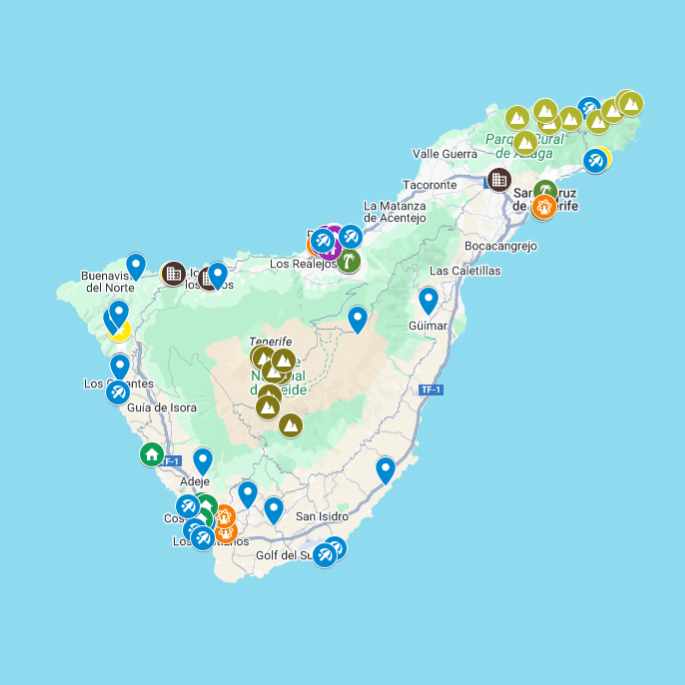
I’ve prepared a detailed digital map for you, where you’ll find over 50 things worth seeing in Tenerife. These are the ones I write about in this article. You’ll also find various accommodation options in it. You can download it for the price of one beer in Prague 🙂
Trip to Tenerife
Don’t want to worry about anything? Buy a trip to Tenerife with yoga by the Atlantic and a climb up El Teide flying from Prague. You’ll explore the historic center of Puerto de la Cruz, head to the Las Cañadas del Teide National Park, and experience an adrenaline-filled drive across the crater floor and through the Masca mountain gorge. You’ll go on a trek around the El Chinyero volcano, see the beautiful corners of Orotava, enjoy a trek in the Anaga Mountains with a visit to the cave village of Chinamada, and discover San Cristóbal de la Laguna with its UNESCO-listed historic center. And in between, you’ll enjoy a nice stretch with a yoga instructor.
Frequently Asked Questions about the Anaga Mountains
The Anaga Mountains are located in the northeast of the island of Tenerife. They start just a few kilometers from the capital, Santa Cruz de Tenerife, and stretch to the northernmost tip of the island.
Anaga catches the moist trade winds coming from the Atlantic. These bring mist and precipitation, creating ideal conditions for the growth of dense laurel forests. This makes Anaga much greener than the dry south of Tenerife.
Yes, but with limitations. Buses from Santa Cruz de Tenerife run to some parts, such as the village of Taganana. However, a car offers much more flexibility and allows you to visit more remote spots and viewpoints.
Anaga offers trails of all difficulties, from short easy walks to full-day hikes. Some paths are steep and rocky, so it’s important to have sturdy footwear and plenty of water.
Anaga can be visited year-round. The best conditions for hiking are usually in spring and autumn, when temperatures are pleasant and visibility is good. There’s a better chance of clear views in the morning, while mist often forms in the afternoon.
Yes, mist is common here and is an important part of the local ecosystem. It gives the landscape a mysterious atmosphere while helping to maintain the moisture needed for the local forests.
Among the most picturesque are Taganana, Benijo, and Chinamada. These villages have preserved their traditional character and offer magnificent views of the mountains and ocean.
You can manage a basic tour in one day, but if you want to complete hiking trails and visit more spots, it’s ideal to set aside two to three days.

Ahoj, já jsem Hela. Cestování je pro mě radost i detektivní práce zároveň. Před každou cestou totiž nadšeně prozkoumávám všechno, co se o daném místě dá zjistit, od zajímavostí a historie až po praktické detaily, které se při plánování opravdu hodí.
Právě proto vznikla Všudybylka. Sdílím tu přehledné průvodce, tipy na ubytování, nápady kam vyrazit v různých částech roku i recenze cestovatelského vybavení, které mi na cestách skutečně pomohlo.
Když zrovna necestuji, najdete mě zabranou do dobré fantasy nebo sci-fi knihy s některou z mých pěti potkanek na rameni.