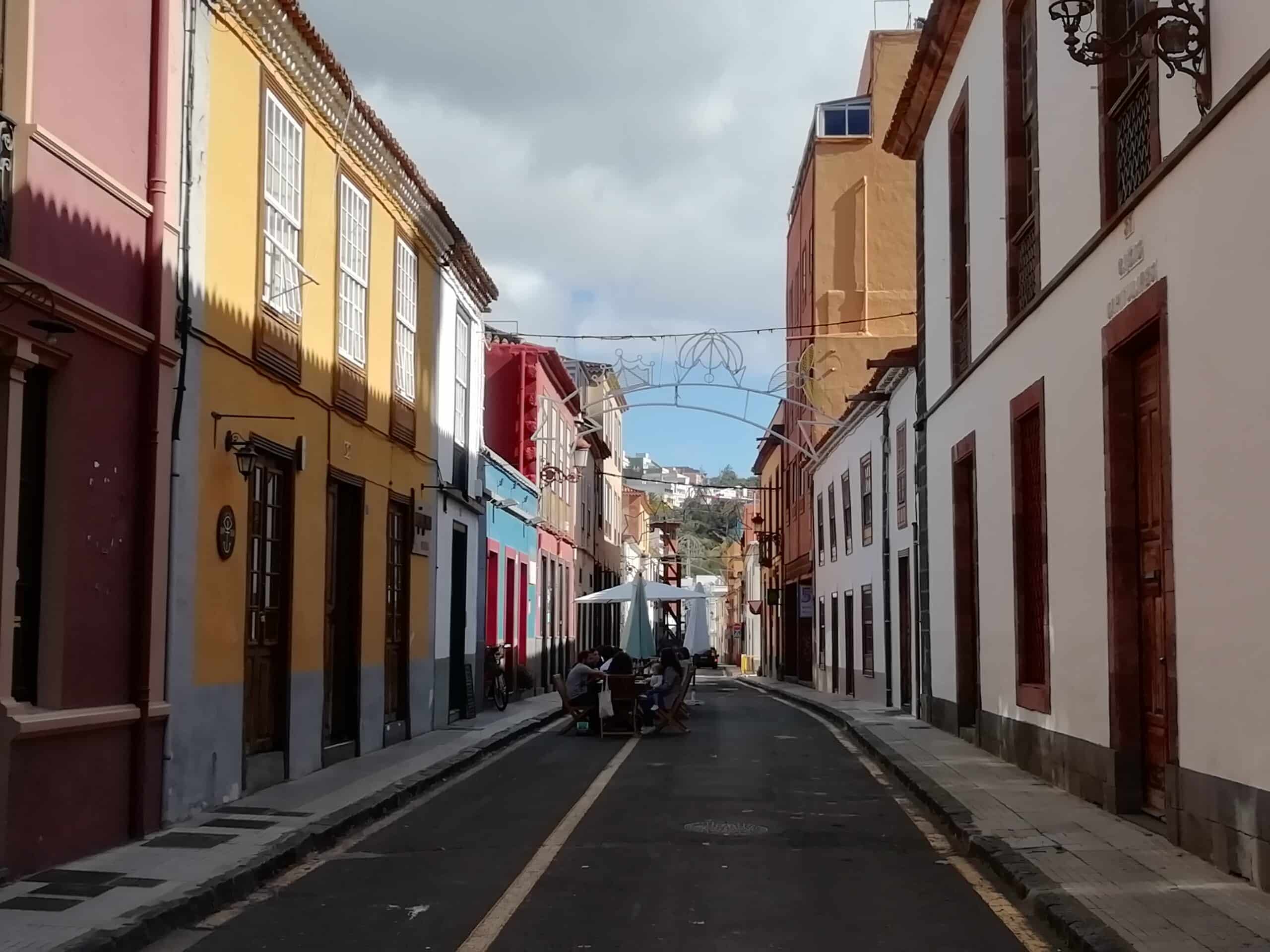
Morning in La Laguna has a special tranquility that you won’t easily find in the rest of Tenerife. The streets are still slightly damp from the night chill, the scent of fresh coffee wafts from open cafes, and among the colorful facades of colonial houses, the city that was once the heart of the entire island slowly wakes up. Here, there is no rush to the beach or the sun. La Laguna invites you to wander quietly, discover details, and listen to the stories hidden behind wooden balconies, stone portals, and centuries-old monasteries. It is a place where Tenerife has a completely different rhythm and where the past naturally blends with everyday life.
San Cristóbal de La Laguna is the only city on Tenerife with UNESCO status, thanks to its colonial architecture and its grid-like network of streets from the 15th century. It was also the first planned city founded on Tenerife, back in 1496. Today, it is the second-largest city on Tenerife, a lively university town with a unique atmosphere.
The city was founded by the conqueror and colonizer, General Alonso Fernández de Lugo. In 1494, at the Battle of Aguere, he killed nearly 1,700 indigenous Guanches and then laid the city’s foundation stone. Today, a chapel with a stone cross stands on the site of the battle. The city became the seat of the island’s military rulers.
The city long served as the capital of Tenerife and the entire island administration before Santa Cruz took over this role. As a result, an unusually large number of monasteries, churches, and noble houses were built here by the island’s standards.
La Laguna is located in northern Tenerife in the Aguerre Valley. It owes its name to the lagoon that once stretched across the valley floor. La Laguna’s academic history dates back to the 18th century, when the University of San Fernando was founded, which remains in operation today.
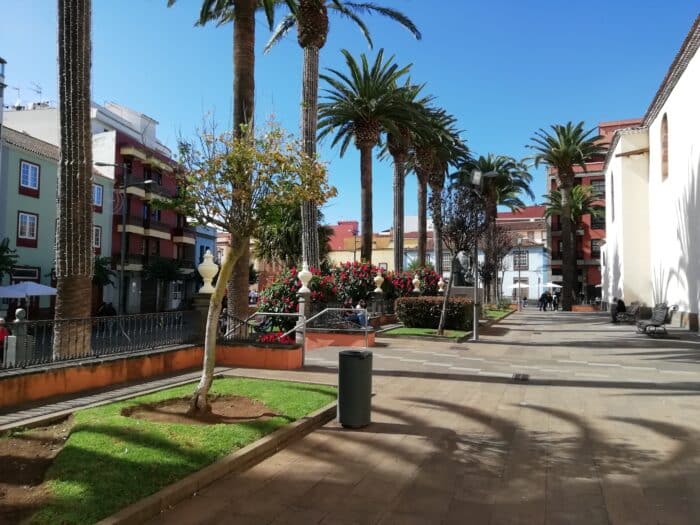
La Laguna was a model city for Spanish colonization. Its regular layout without walls became the template for urban planning in Latin America—such as Havana, Lima, or Cartagena. This very idea of a “city without walls” is one of the reasons for its UNESCO listing.
Unlike most tourist spots on Tenerife, there is no beach or access to the sea, and that is exactly what makes La Laguna an ideal counterpoint to the coastal resorts. La Laguna lives by everyday local life, not at a holiday pace. The climate here is cooler and damper than in the south of the island. Mists often appear, giving the city a special, slightly melancholic atmosphere, perfect for slow walks and photography.
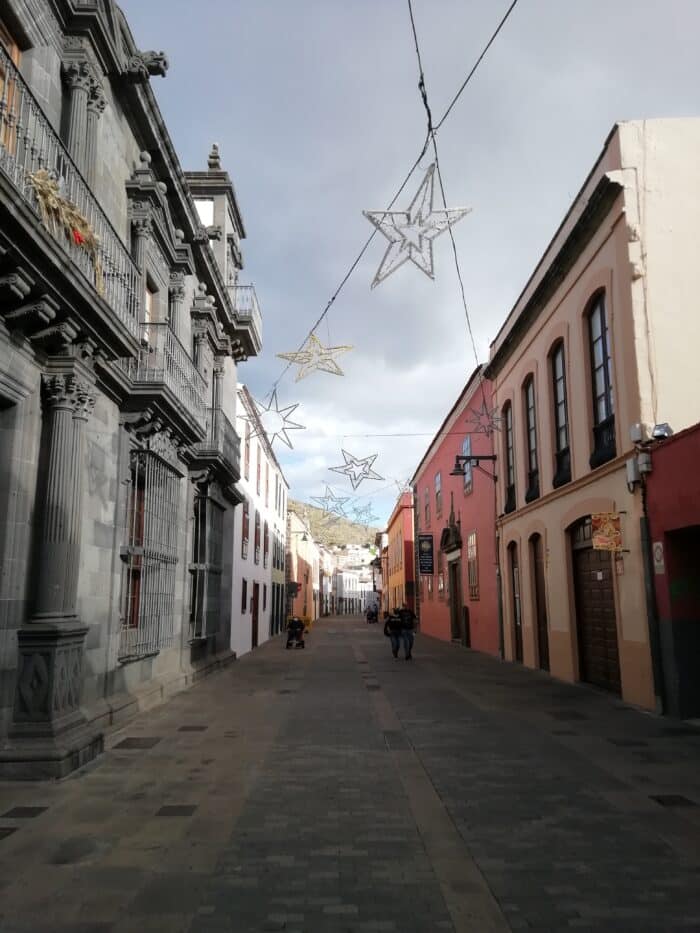
The historic center is full of subtle details: colorful facades, wooden Canarian balconies, and inner patios hidden behind heavy doors. The slower you go, the more you’ll see.
What to see in La Laguna
Casa Museo Cayetano Gómez Felipe
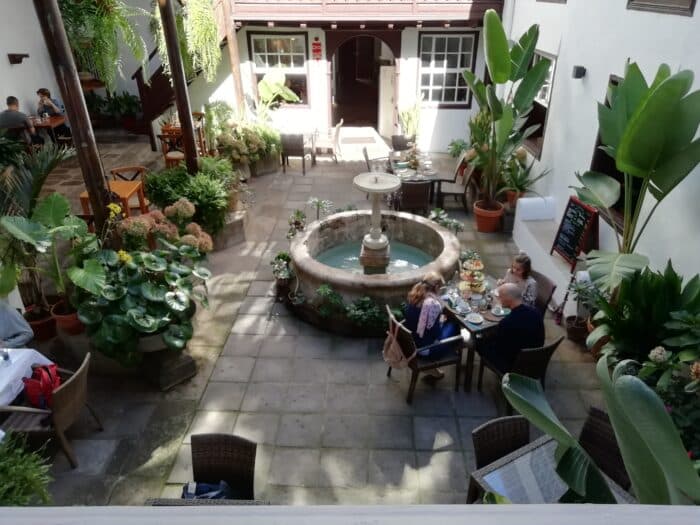
The Cayetano Gómez Felipe Museum is located in a traditional 18th-century Canarian house. The house was built in 1703 by Irish merchant Bernard Walsh. In the 20th century, it was home to the prominent Canarian collector Cayetano Gómez Felipe, who hailed from the island of La Palma. Today, his extensive collections of antiques are on display, mapping the art and customs of the Canary Islands throughout history from the 16th to the 20th century.
Various rooms of the house display both items that belonged to the Felipe family and things that Felipe collected throughout his life. His collection is considered the largest collection of antiques related to daily life in the Canary Islands and Canarian art.
The collection, which originated exclusively in the Canary Islands, includes a diverse range of items, from paintings and sculptures to glass, furniture, and textiles, as well as clothing, jewelry, personal ornaments, ceramics, wrought iron, architectural details, photographs, historical documents, and other valuable exhibits.
The museum is open Tuesday, Wednesday, and Thursday from 10:00 AM to 8:00 PM, Friday and Saturday from 10:00 AM to 9:00 PM. Sunday from 11:00 AM to 4:00 PM. Closed on Mondays and public holidays.
Casa del Corregidor and Casa de la Alhondiga
These beautiful historic houses are among the oldest witnesses to La Laguna’s history, dating back to the 16th century. Both buildings played an important role in the city’s daily functioning in the past—Casa del Corregidor served as the residence of the royal administrator, while Casa de la Alhóndiga functioned as the municipal granary and a place for food trade control.
Their austere but elegant architecture today recalls the time when La Laguna was forming as the administrative and economic center of the island, and while walking through the historic center, they subtly complement the atmosphere of a city full of history.
The Casa del Corregidor building was completed in 1545 by Jerónimo Álvarez de Sotomayor, the then-corregidor of Tenerife. It got its name from the function it fulfilled for many years, as it served as the official residence of the corregidors during their time in office.
The Casa de la Alhóndiga on Calle de La Carrera was built in the early 18th century and underwent a reconstruction in the 19th century with the intention of converting it into a theater. Over the years, the building has served various purposes. It functioned as a granary (hence its name, meaning municipal granary), a state warehouse, a prison, a school, and a court. It currently houses municipal offices.
Episcopal Palace (Palacio Episcopal)
The construction of this palace was ordered in 1681 by the Count of Valle Salazar. The two-story building is characterized by a central pediment on the main facade, which is made of stone and dates from the 17th century, a coat of arms, gargoyles, and figures with animal motifs.
Since the 19th century, the palace has served as the seat of the Bishopric of the Diocese of Tenerife and is declared a cultural monument. After a fire in 2006, the building was rebuilt and completely renovated three years later.
Plaza del Adelantado
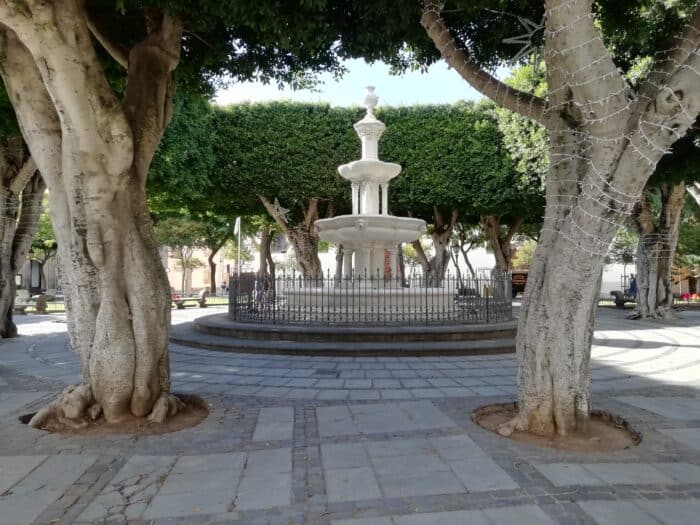
One of the main squares in La Laguna offers pleasant seating in the shade of trees right in the heart of the city. In the middle of the square is a small fountain with a statue. The square is lined with interesting buildings including the Convento de Santa Catalina, a building that boasts an original cloister, and the Palacio de Nava. You’ll also find the neoclassical town hall here, where you can view frescoes that map the city’s history.
The tourist information office is located on the square, housed in a historic building with a typical inner courtyard with balconies and a small garden. Right next to the square, you can get refreshments at the picturesque market, which offers delicacies ranging from fruit and cheese to seafood and fish.
To the east of the square lies the cathedral Iglesia de Nuestra Señora de la Concepción. There are several parking lots around the square, so if you arrive by car, this very spot will be your gateway to the picturesque streets of La Laguna, which are best explored on foot.
Iglesia de Nuestra Señora de la Concepción
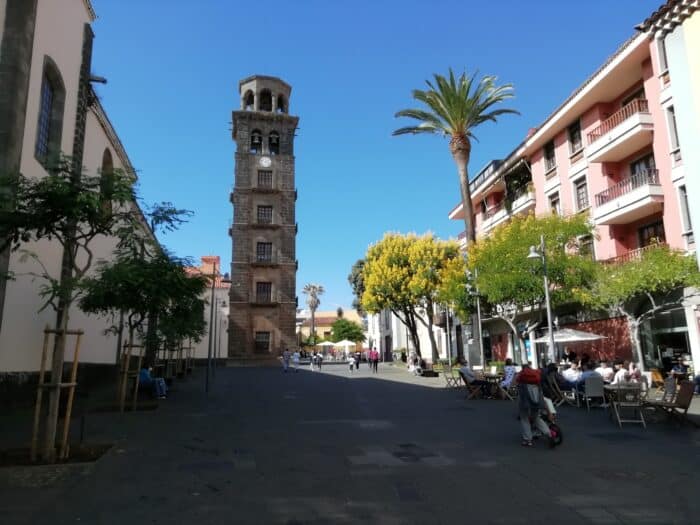
Iglesia de Nuestra Señora de la Concepción was the first church founded on Tenerife. It was founded in 1511 and its construction was completed in 1558. It is the main parish of La Laguna and the island of Tenerife.
The most striking feature of this three-aisled church is the 28-meter-high tower with a square base in the Tuscan style. It was completed between 1694 and 1697. You can climb the tower via wooden stairs and enjoy a panoramic view of La Laguna. Just be aware that the bells ring every 15 minutes and are very loud.
The church was repeatedly modified and expanded throughout its history. One of the most significant reconstructions took place in the 18th century according to the design of architect Diego Nicolás Eduardo. In 1972, due to severe structural damage, part of the building collapsed, necessitating an extensive renovation that was completed two years later.
The current appearance of the temple includes three aisles, arched arcades, and a wooden ceiling in the Mudéjar style. The interior also features a historic baptismal font made of glazed ceramic dating from the period after the conquest of the Canary Islands. On June 5, 1948, the church was declared a historical-artistic monument. There is a small fee to tour the interior of the church.
San Cristóbal de La Laguna Cathedral
The Cathedral of La Laguna, full name Catedral de Nuestra Señora de los Remedios (Cathedral of Our Lady of Remedies), is located right in the historic center of the city. In 1511, a hermitage stood on the site of today’s cathedral, which was replaced in 1515 by a shrine in the Mudéjar style. In 1618, a tower was added, and in 1819, the church was elevated to a cathedral. The current cathedral building was built between 1904 and 1915 in the Gothic style. It has three main aisles and an ambulatory. It was one of the first buildings in Spain constructed from concrete.
You can also buy a ticket to the cathedral online here.
Museo de la Ciencia y el Cosmos
In this museum focusing on astronomy, technology, and science, which combines elements of a traditional museum and a theme park, you can explore not only the secrets of the universe but also other scientific fields. Interactive exhibits will introduce you to the history of space discovery. You can also learn how a mobile phone or human organs work. In the planetarium, you can enjoy a view of the starry sky. You’ll also find several rooms that simulate space. Using a parabolic antenna, you can send a message into space. This museum is a great choice for a trip with children.
Museo de Historia de Tenerife
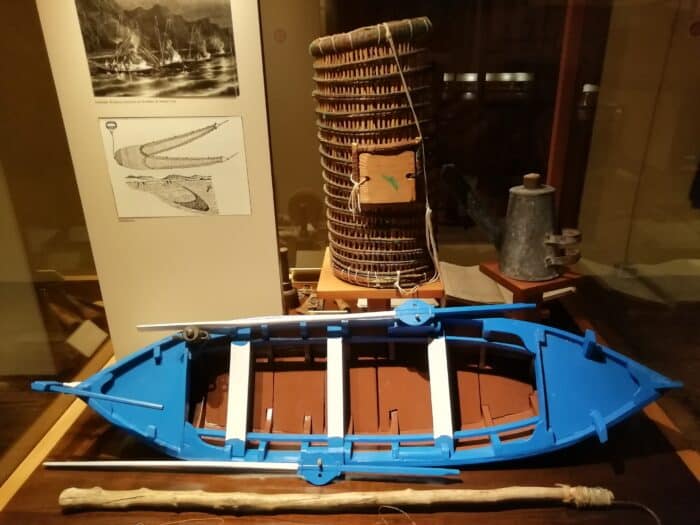
This museum is located in the historic Casa Lercaro, which was built in the 16th century. It belonged to the Lercaro family of Genoese merchants. The Museum of the History of Tenerife has been located here since 1993. The museum offers a broad look at the history and anthropology of Tenerife from the 15th to the 20th century. It covers both early settlement and the history of the Spanish conquest and occupation.
Interesting items you can see here include a wine press, mills, and some of the oldest maps of the Canary Islands, which are considered one of the most valuable exhibits. You can see furniture, documents, clothing, and paintings from the 16th century. The house also has beautiful gardens where you can have a picnic.
According to legend, Catalina Lercaro, the daughter of the lord of the manor, was forced to marry a wealthy old man she didn’t want to wed, so on her wedding day, she committed suicide by throwing herself into a well. Since then, people have claimed to see her ghost wandering the museum’s corridors.
Museum of Archaeology
A small museum dealing with the history of the island of Tenerife and its original inhabitants, the Guanches. You can also see examples of native flora and fauna and learn about the volcanic origin of the island. The museum is relatively modern but does not offer descriptions in English.
Fundación Cristino de Vera-Espacio Cultural CajaCanarias
The Cristino de Vera Foundation – Espacio Cultural CajaCanarias manages an exceptional collection of artworks donated by Cristino de Vera, one of the most important representatives of 20th-century Spanish art. The guided tour is also adapted for younger visitors. The tour includes a workshop that introduces children to both history and art.
It is located in a historic 18th-century house that has retained the characteristic features of traditional Canarian architecture. The building itself is a significant monument and is one of the important cultural stops when visiting San Cristóbal de La Laguna.
Church and Monastery of Saint Augustine
The church building lost its roof in a fire in 1964. The building is now partially demolished, and its damaged part is closed to visitors. The accessible part includes several corridors and rooms on two floors, an inner courtyard, and the church with its tower.
This church and former monastery look very unassuming from the outside, but inside they hide exceptionally valuable exhibits from the 16th and 17th centuries. The exhibition spaces are extensive and spread over two floors. You’ll find paintings, historical clothing, liturgical vestments, sculptures, tapestries, and many other artifacts. It’s a beautiful collection that is definitely worth a visit. Photography is not allowed here.
Outside, there is a small garden where it’s pleasant to sit for a while and rest after a walk through the city.
When to go to La Laguna
The best time to visit La Laguna is weekday mornings (approx. 10:00 AM–1:00 PM). Monuments and churches are open, the city is lively but not overcrowded. Avoid Sundays and public holidays, when a large part of the center is closed. The ideal period is spring or the pre-Christmas season, when La Laguna has a beautiful atmosphere and pleasant temperatures.
If you want to read about my visit to this city, check it out here.
Accommodation in La Laguna
Eco Suites Caves offers an outdoor pool, a garden, an outdoor grill, a hot tub, a terrace with mountain views, free private parking, and free bike rental. This holiday home has 2 bedrooms, 1 bathroom, and a fully equipped kitchen.
La Laguna Gran Hotel offers its guests a seasonal outdoor pool, a garden, a restaurant, a fitness center, and a bar. Each room has a wardrobe, a desk, a flat-screen TV, and a private bathroom.
Tenerife Guide
Read about what to do, experience, and see in Tenerife: Tenerife Guide – 46 best tips on what to see and do in Tenerife
Tenerife map for download
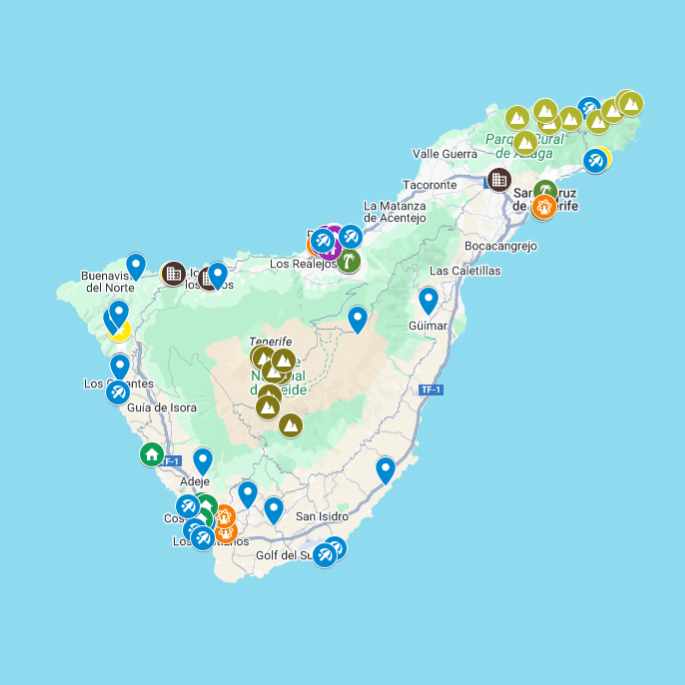
I’ve prepared a detailed digital map for you, where you’ll find over 50 things worth seeing in Tenerife. These are the ones I write about in this article. You’ll also find various accommodation options in it. You can download it for the price of one beer in Prague 🙂
Trip to Tenerife
Don’t want to worry about anything? Buy a trip to Tenerife with yoga by the Atlantic and a climb up El Teide flying from Prague. You’ll explore the historic center of Puerto de la Cruz, head to the Las Cañadas del Teide National Park, and experience an adrenaline-filled drive across the crater floor and through the Masca mountain gorge. You’ll go on a trek around the El Chinyero volcano, see the beautiful corners of Orotava, enjoy a trek in the Anaga Mountains with a visit to the cave village of Chinamada, and discover San Cristóbal de la Laguna with its UNESCO-listed historic center. And in between, you’ll enjoy a nice stretch with a yoga instructor.

Ahoj, já jsem Hela. Cestování je pro mě radost i detektivní práce zároveň. Před každou cestou totiž nadšeně prozkoumávám všechno, co se o daném místě dá zjistit, od zajímavostí a historie až po praktické detaily, které se při plánování opravdu hodí.
Právě proto vznikla Všudybylka. Sdílím tu přehledné průvodce, tipy na ubytování, nápady kam vyrazit v různých částech roku i recenze cestovatelského vybavení, které mi na cestách skutečně pomohlo.
Když zrovna necestuji, najdete mě zabranou do dobré fantasy nebo sci-fi knihy s některou z mých pěti potkanek na rameni.