This article belongs to the Bucket List category. It’s a place I’d love to visit, so I’ve done detailed research on information and visitor experiences in advance.
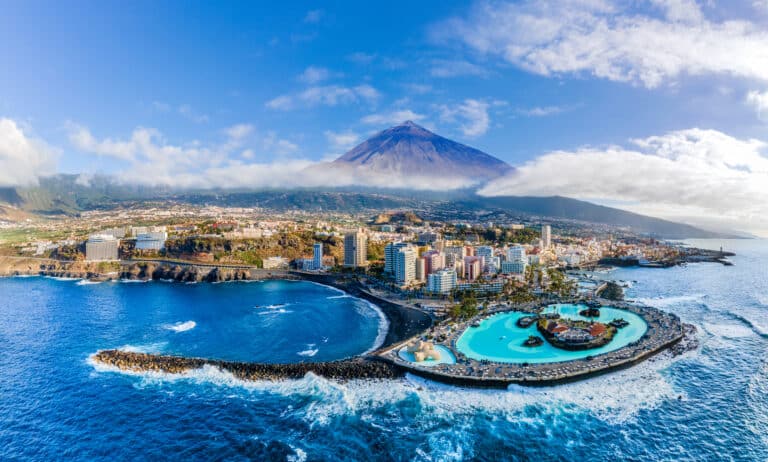
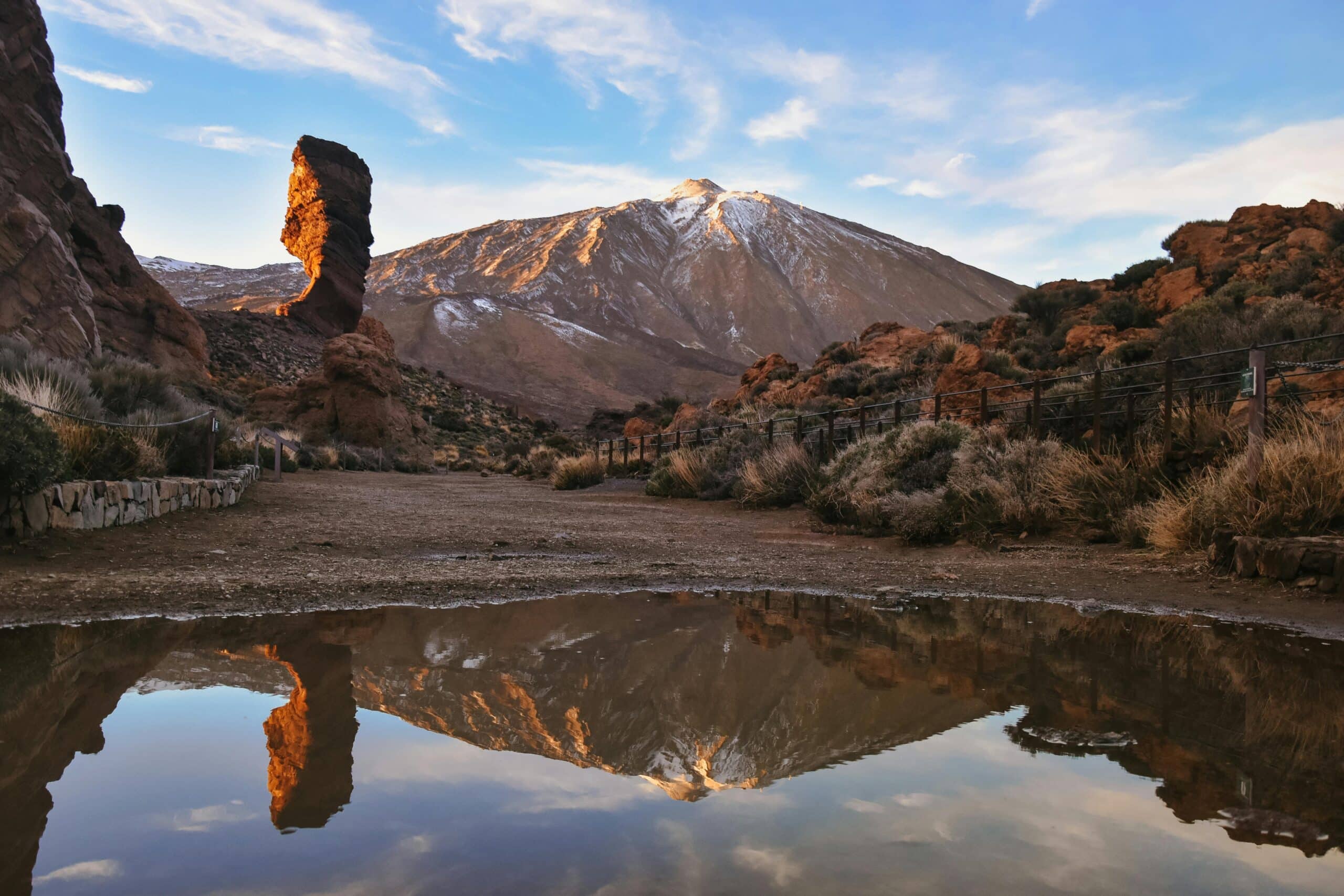
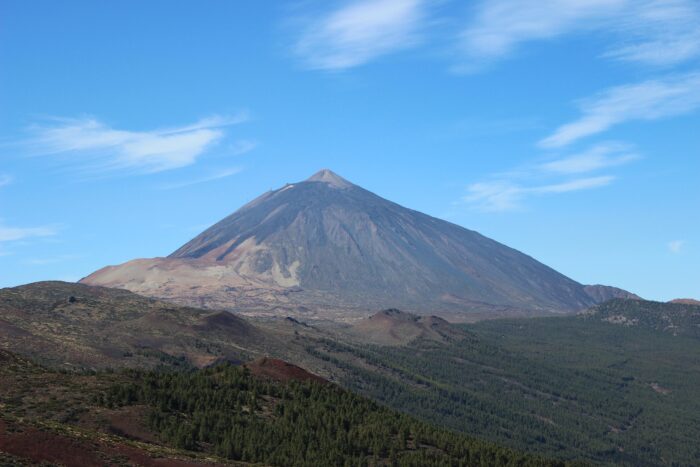
At 3,715 meters, El Teide is the highest mountain in Spain and the entire Atlantic Ocean. This dormant volcano offers breathtaking views of Tenerife and the surrounding islands. El Teide is located in the center of Tenerife within the national park of the same name, which covers 36% of the island’s area. The volcano, along with the surrounding national park, is a UNESCO World Heritage site.
The name El Teide means “Hell Mountain” in the language of the Guanches, the island’s indigenous inhabitants. According to their legend, the evil god Guayota lived inside it and punished them with volcanic eruptions. The Guanches believed the mountain supported the heavens and worshipped it.
The entire volcanic massif consists of a pair of volcanoes, Pico del Teide and Pico Viejo. Both are located inside the vast Las Cañadas caldera. The circumference of this caldera measures approximately 74 kilometers.
The Las Cañadas caldera, which makes up a large part of the Teide National Park, was created 150,000 years ago by a massive volcanic explosion. The mountains Pico del Teide and Pico Viejo were also formed during this period.
The last volcanic activity in this area was recorded on Pico Viejo in 1909, when a 5-kilometer-long lava flow ran down its slope. Christopher Columbus is said to have witnessed the volcanic fury on his way to America. The volcano is not extinct and is considered active, only dormant. Fumaroles, or vents of hot gases, can still be observed in its crater. Sulfur vapors with a temperature of around 85°C emerge from them.
El Teide has a flat conical peak that rises from a much older and wider crater at an altitude of around 2,000 meters. One of the first people to visit the summit of El Teide was the explorer Alexander von Humboldt. Today, 4 million tourists visit every year.
Nature on El Teide
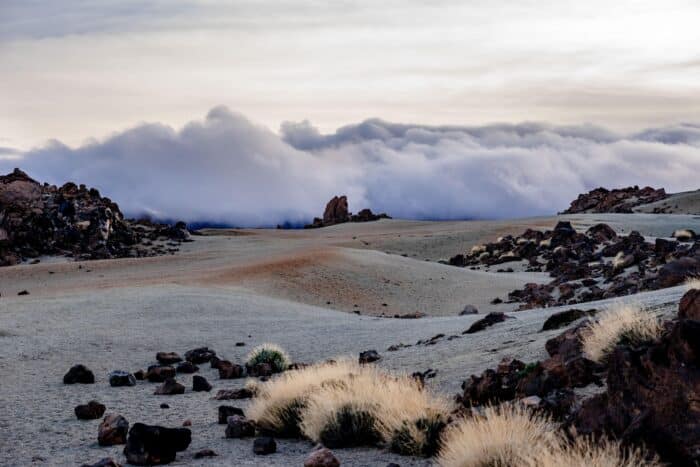
The Teide massif significantly influences the local climate. On the northern and northwestern slopes, moist ocean air cools and turns into rain clouds, bringing moisture to the landscape below the mountain. Thanks to this, the area is lush and green all year round, and bananas, almonds, citrus fruits, and other crops thrive here. The air is often scented with laurel and myrtle.
In contrast, the southern side of the volcano lies in a rain shadow, making it much drier and covered with vegetation adapted to a lack of water. A stable and pleasant climate is also ensured by the Canary Current, which keeps temperatures mostly between 18 and 30°C throughout the year. In these conditions, exceptionally old dragon trees can grow, some up to two thousand years old. The summit of the volcano is often covered in snow and ice during the winter months, creating a striking contrast with the warm climate on the coast.
Cable car
You can reach the summit of the El Teide volcano either on foot or comfortably by cable car. In less than 8 minutes, the cable car takes you from the base station at 2,356 meters up to 3,555 meters, covering an elevation gain of nearly 1,200 meters. The ride must be booked online in advance for a specific time, as capacity is limited. From the upper station, you can enjoy magnificent views of the national park and the entire island. The first cable car departs at 9:00 AM, the last one goes up at 4:00 PM and down at 4:50 PM.
When buying your cable car ticket, also activate the SMS notification option, which informs you if operations are canceled on that day. This allows you to easily reschedule your booking for another date or request a refund.
If you want to climb to the very summit of Teide, you need a special permit, which is valid for the last approximately 700 meters from the upper cable car station and must be booked well in advance. The cable car operates daily from 9:00 AM to 4:50 PM, and a round-trip ticket costs approximately 40 euros. You can stay at the upper station for a maximum of one hour, or two hours if you have a permit to climb to the summit.
Calculate your visit time so you don’t miss the cable car down—we made the mistake of booking a slot that was too late, and then we had to cancel our trip to the summit of El Teide because we wouldn’t have made it back by cable car.
Weather on the Teide volcano can change quickly, so it’s a good idea to check current conditions in advance, especially wind strength, for example on a specialized forecast for the mountain peak.
Tip: It is possible to book a trip to the summit of El Teide as part of an organized tour. The price includes a transfer from hotels in selected areas.
Reaching the summit on foot
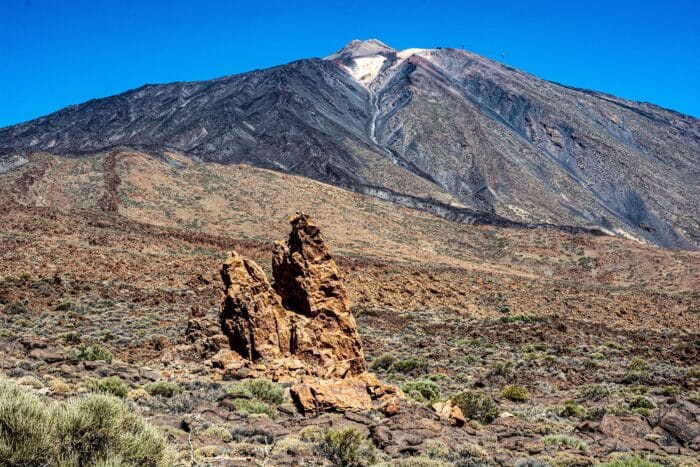
It is possible to climb El Teide on foot via two different routes: Montaña Blanca or La Catedral.
The most popular hiking route to the summit of Teide starts at the Montaña Blanca parking lot, where spaces are limited, so people often park along the road. The climb is physically demanding but manageable for anyone in good shape with sturdy hiking boots.
The first part follows a wide gravel path with a gradual incline for several kilometers, while the second half continues more steeply along a rocky trail that winds through the volcanic landscape to the La Rambleta upper cable car station.
From there, the final section remains to the summit itself, for which you must have a pre-booked permit. The entire route measures approximately 9.5 kilometers one way, covers an elevation gain of about 1,350 meters, and the ascent takes roughly six hours.
An alternative route leads from the La Catedral rock formations around the Pico Viejo volcano. It is slightly longer and less frequented, but offers an even wilder experience as it passes through less marked terrain and feels more remote.
Getting to El Teide
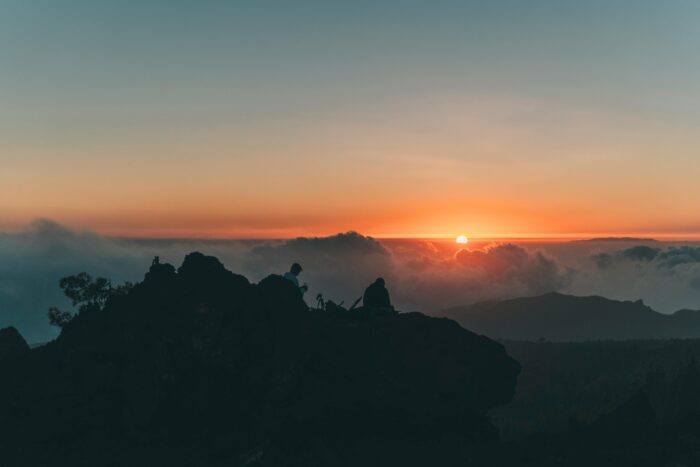
The easiest way to get to the Teide volcano is by car via the TF-21 road, which runs along the southern slope of the mountain and passes the lower cable car station and the main starting points for hiking trails through Teide Park. You will find several parking lots in the area; the largest is located right by the cable car, and all are free.
If you don’t have a car available, you can also use the bus service. Route 342 from the southern part of the island, such as Los Cristianos and Costa Adeje, and route 348 from the north, from La Orotava and Puerto de la Cruz, go to Teide. However, these services only run once a day, usually up in the morning and back in the afternoon, so you need to plan your trip carefully.
Accommodation near El Teide
Accommodation near El Teide is available at the Parador de Las Cañadas del Teide, which offers non-smoking family rooms, an indoor pool, a fitness center, a restaurant with typical Canarian dishes, and free parking.
You can also book a stay at the Casa Tajinastes del Teide cottage, where you will find a garden, a shared lounge, a terrace, and mountain views. An outdoor grill, a kitchen with a refrigerator, and a flat-screen satellite TV are also available.
Tenerife Guide
What to see and experience in Tenerife? Read my exhaustive guide to the island of eternal spring: Tenerife Guide – 46 best tips on what to see and do in Tenerife
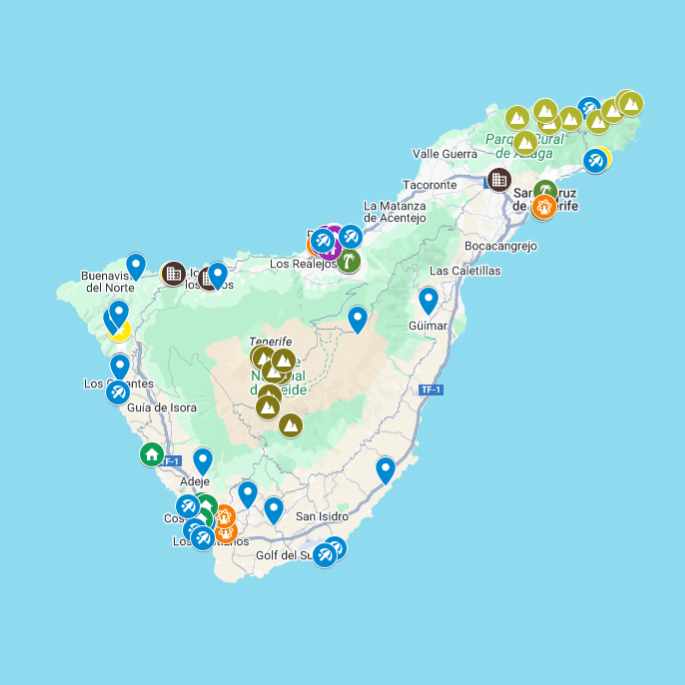
Downloadable map of Tenerife with interesting places and recommended accommodation marked
I’ve prepared a detailed digital map for you, where you’ll find over 50 things worth seeing in Tenerife. These are the ones I write about in this article. You’ll also find various accommodation options in it. You can download it for the price of one beer in Prague 🙂
Trip to Tenerife
Don’t want to worry about anything? Buy a trip to Tenerife with yoga by the Atlantic and a climb up El Teide flying from Prague. You’ll explore the historic center of Puerto de la Cruz, head to the Las Cañadas del Teide National Park, and experience an adrenaline-filled drive across the crater floor and through the Masca mountain gorge. You’ll go on a trek around the El Chinyero volcano, see the beautiful corners of Orotava, enjoy a trek in the Anaga Mountains with a visit to the cave village of Chinamada, and discover San Cristóbal de la Laguna with its UNESCO-listed historic center. And in between, you’ll enjoy a nice stretch with a yoga instructor.
El Teide is located in the center of the island of Tenerife in the Teide National Park. It is the island’s landmark and is visible from many places across Tenerife.
El Teide measures 3,715 meters above sea level and is the highest mountain in Spain and the highest volcano in the Atlantic Ocean.
Yes, El Teide is considered an active but dormant volcano. There are still active fumaroles in its crater from which hot gases escape.
The cable car will take you to an altitude of 3,555 meters. To reach the summit itself, you need to walk and have a special permit reserved in advance.
Yes, a permit is required for the final section from the upper cable car station to the summit. It is free, but must be booked online well in advance.
The climb is physically demanding due to the large elevation gain and high altitude, but it does not require climbing equipment. Good fitness and sturdy footwear are important.
El Teide can be visited year-round. The best conditions are usually in the morning when there is better visibility and less wind. In winter, there may be snow at the summit.
The easiest way is by car via the TF-21 road. Bus route 342 from the south and 348 from the north of the island are also available.
The cable car ride takes approximately 8 minutes and covers an elevation gain of nearly 1,200 meters.
The climbing time depends on the chosen route and physical fitness. The most common path from Montaña Blanca to the upper cable car station takes approximately 5 to 6 hours one way. If you continue to the summit itself, expect another 30 to 60 minutes. The descent usually takes 3 to 4 hours. Many visitors therefore choose a combination of taking the cable car up and hiking down.
The price of the cable car is around 40 euros for an adult round-trip ticket. A one-way ride costs approximately 22 euros. Tickets must be booked online in advance for a specific time, as spaces are limited and the cable car is often sold out.
Yes, El Teide is one of the most exceptional places in Tenerife and offers a unique volcanic landscape, panoramic views, and an unforgettable experience.

Ahoj, já jsem Hela. Cestování je pro mě radost i detektivní práce zároveň. Před každou cestou totiž nadšeně prozkoumávám všechno, co se o daném místě dá zjistit, od zajímavostí a historie až po praktické detaily, které se při plánování opravdu hodí.
Právě proto vznikla Všudybylka. Sdílím tu přehledné průvodce, tipy na ubytování, nápady kam vyrazit v různých částech roku i recenze cestovatelského vybavení, které mi na cestách skutečně pomohlo.
Když zrovna necestuji, najdete mě zabranou do dobré fantasy nebo sci-fi knihy s některou z mých pěti potkanek na rameni.